Known for
- 1
A port city on hills.
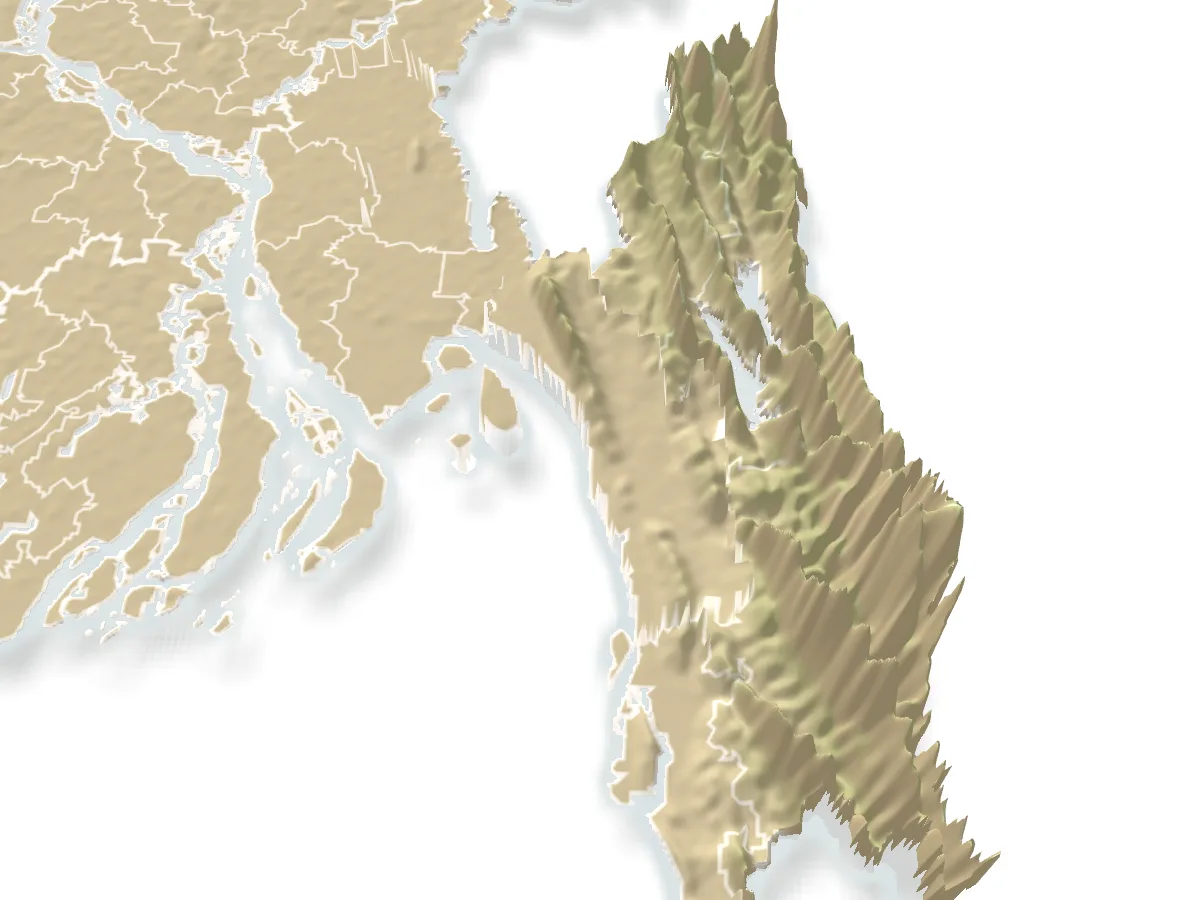
Chattogram is the country's second city and its only real port, built where the Karnaphuli meets the Bay of Bengal on a scatter of low hills. Ships, the old court building on Fairy's Hill, the Mughal mosque at Anderkilla and the war cemetery are all within a few kilometres of each other.
- 2
The sea at the end of the road.
Patenga, where the Karnaphuli enters the sea, is the city's evening out; Parki across the river is quieter, and Guliakhali up the coast is a strange, beautiful mangrove beach with grass running into the water.
- 3
Sitakunda and Mirsharai.
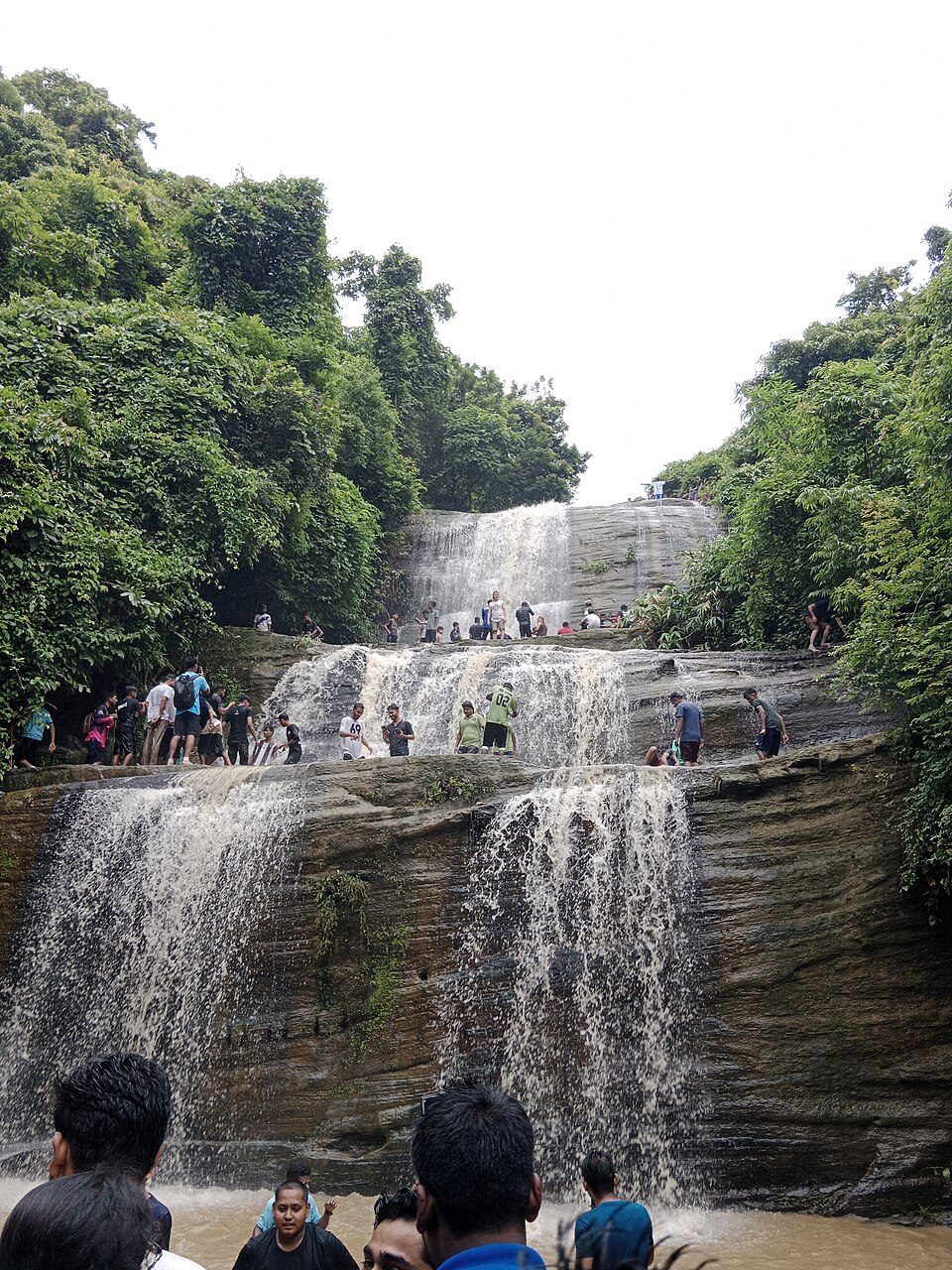
North of the city the hills come down to the highway: Chandranath's temple on its thousand-foot summit, the eco-park with its waterfall, Khoiyachora's nine-step falls and the Mahamaya lake. The Shiva Chaturdashi fair in February or March brings lakhs of pilgrims up the hill.
- 4
Mezban and shutki.
Chattogram eats differently: mezban, the beef feast with its thin, hot gravy, served to hundreds at a time; dried fish from the coast in curries with a lot of garlic; and the sweet, sour kalabhuna and bela biscuits of the old town.
- 5
Jabbar's boli khela.
On 12 Baishakh, around 25 April, the wrestling contest Abdul Jabbar started in 1909 is held at Laldighi, and a three-day fair of wooden furniture, pottery, plants and sweets fills the lanes around it.
- 6
The gateway east and south.
From here the road and the river go on to the Hill Tracts, and the coast road runs south to Cox's Bazar; most journeys into the south-east begin at Chattogram's station or bus stands.
Best season
GoodFairNov–Feb
- Shiva Chaturdashi fair, Sitakunda Three days around Maha Shivaratri, February or March, on Chandranath hill
- Jabbar's boli khela 12 Baishakh (about 25 April) at Laldighi, with a three-day fair
- Urs of Bayazid Bostami Each year at the shrine in Nasirabad; the shrine is busy every Thursday evening
November to February is dry, mild and clear: the hills of Sitakunda are walkable, the beaches are at their best in the evening, and the city's humidity drops. February or March brings the Shiva Chaturdashi fair on Chandranath, and late April the boli khela.
The monsoon runs June to September and Chattogram is one of the wettest cities in the country; hill roads wash out, the Sitakunda and Mirsharai streams become dangerous, and landslides on the city's cut hills are a real risk. The waterfalls, though, are only full then: Khoiyachora in October, just after the rains, is the compromise most people make.
Cyclones come off the Bay in May and October to November; if a warning is up, stay off the beaches and the river.
Getting there
Train
From Dhaka
5–7 hours
Subarna, Sonar Bangla, Mahanagar, Turna and more from Kamalapur to Chattogram station.
Bus
From Dhaka
About 6 hours
Day and night from Sayedabad and Arambagh via Cumilla.
Air
From Dhaka
About an hour
Several flights a day to Shah Amanat airport at Patenga.
Getting around
City to Sitakunda and Mirsharai
1–2 hours
Any northbound bus on the Dhaka highway; CNG or autos from the bazar to the hills.
By train from Dhaka's Kamalapur: the Subarna, Sonar Bangla, Mahanagar, Turna and other intercity trains take five to seven hours to Chattogram station in the middle of the city. By bus, services leave from Sayedabad and Arambagh day and night along the Dhaka–Chattogram highway through Cumilla, about six hours. By air, Shah Amanat airport at Patenga has several flights a day from Dhaka.
In the city, CNG auto-rickshaws and ride-hailing apps cover everything; the court building, Anderkilla, the war cemetery and Agrabad are a few kilometres apart. Patenga and the airport are about 15 km south on the Airport Road; Foy's Lake is at Khulshi in the north of the city.
Out of town, the Dhaka highway north serves Sitakunda (about 35 km) and Mirsharai (about 60 km): any northbound bus drops you at Sitakunda bazar, Boro Darogahat or the Khoiyachora turn. Parki is across the Karnaphuli by the tunnel or the Anwara road; Banshkhali is about 50 km south-west on the coast road.
Local food
MezbanMust try
Beef in a thin hot gravy with cholar dal, the feast of Chattogram.
ShutkiMust try
Dried loitta, churi or shrimp fried with garlic and chilli.
Kalabhuna
Beef slow-cooked almost black.
Bela biscuit
The old town's hard sweet rusk, for tea.
Mezban is the district's great meal: beef cooked in a thin, fiercely spiced gravy, with a bowl of cholar dal and plain rice, served to hundreds of guests sitting in rows at weddings, funerals and community feasts. You will be invited if you stay long enough; failing that, several restaurants in the city serve mezbani beef every day.
Shutki, dried fish from the coast, is the other taste of Chattogram: loitta, churi and chingri shutki fried with garlic and chilli, or cooked with pumpkin. Kalabhuna, beef slow-cooked until almost black, comes from here too, and the old town's bela biscuit, a hard, sweet rusk dunked in tea, is sold in the bakeries of Anderkilla.
For fish straight from the sea, the stalls at Patenga and Parki fry whatever came in that day; Agrabad and GEC have the city's restaurants.
Places to see
 Mosque and shrineIqbal Hossain · CC BY-SA 4.0
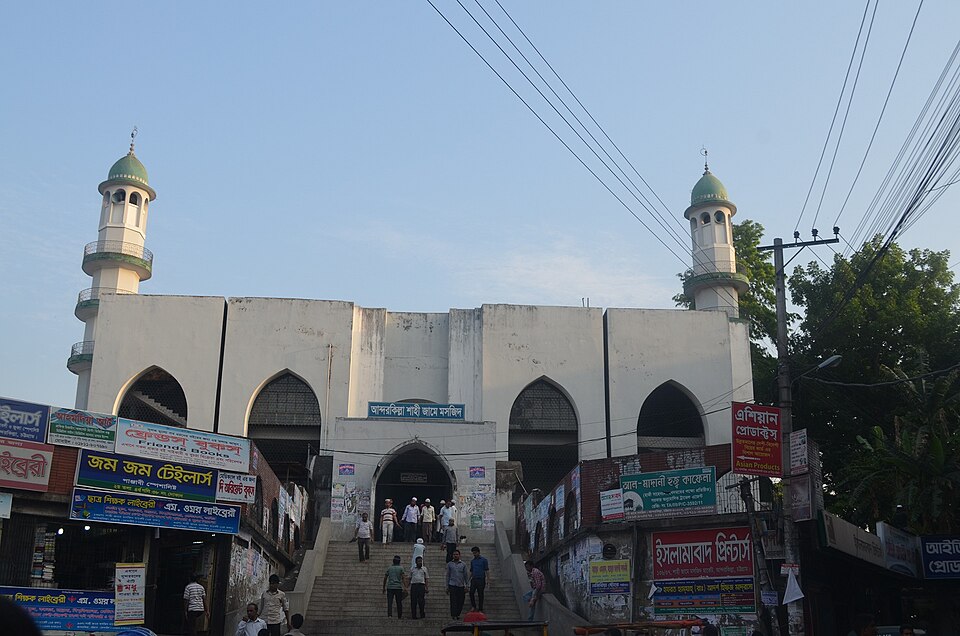
Anderkilla Shahi Jame Mosque
The Mughal mosque of 1667 on the hill of the inner fort, built by Buzurg Umed Khan the year after his father Shaista Khan took Chattogram from the Arakanese; the city's main mosque, with a Persian inscription over the door.
 Park, eco park and picnic spotAzim Al Jabber · CC BY-SA 3.0
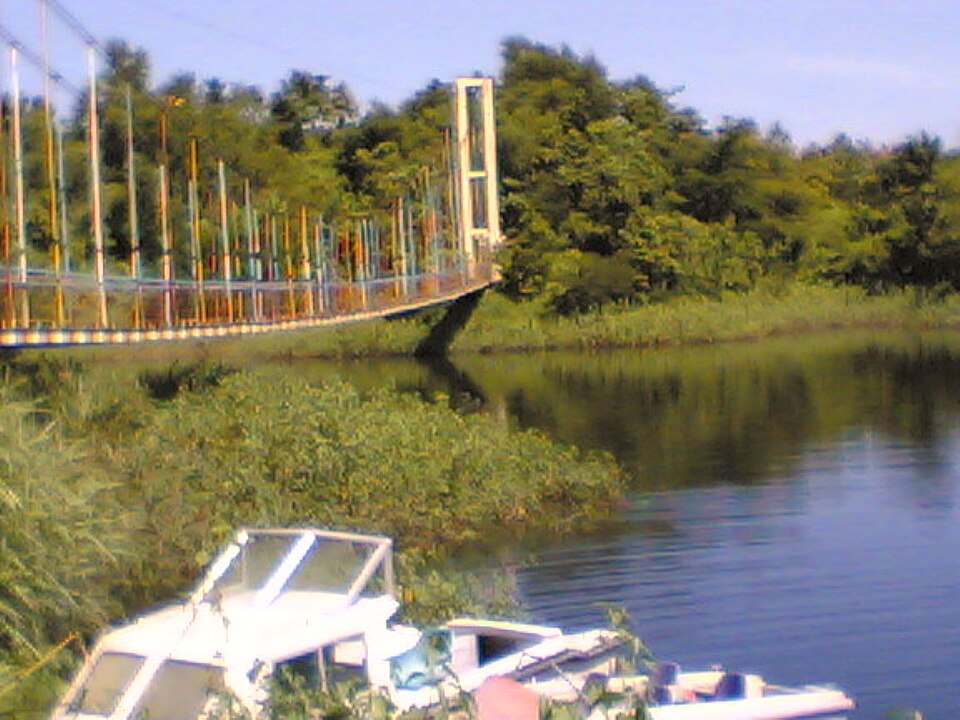
Banshkhali Eco Park
A thousand hectares of hill forest, two lakes and a hanging bridge at Shilkup in Banshkhali, 50 km south-west of the city, declared an eco-park in 2003, with the Bay's long coast a few kilometres west.
 Monument and memorialRohan Uddin Fahad · CC BY-SA 3.0
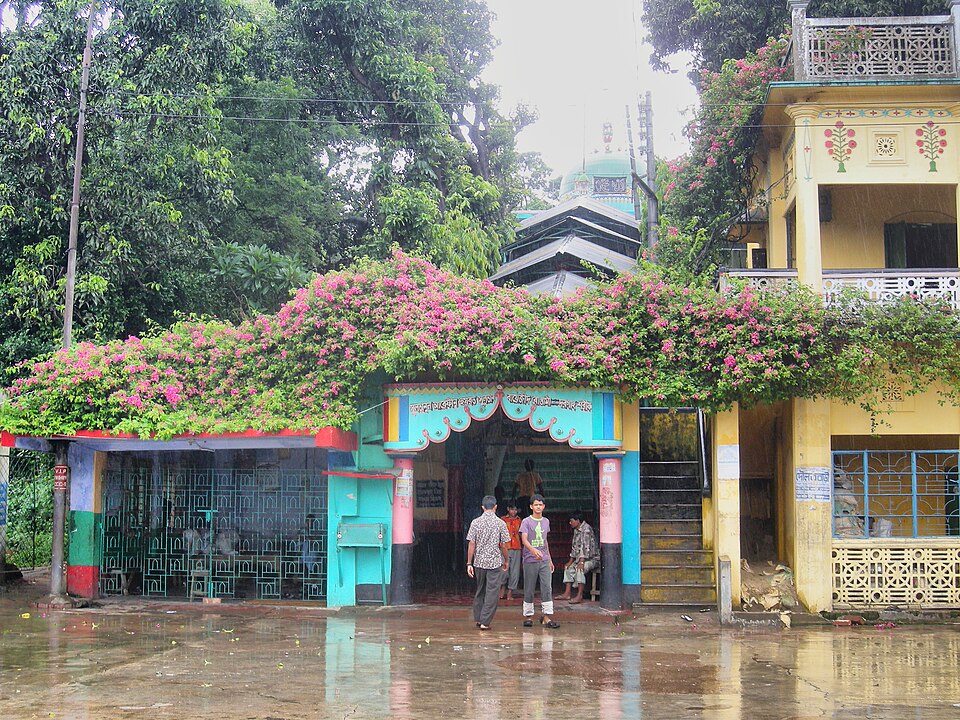
Shrine of Bayazid Bostami
A hilltop shrine at Nasirabad attributed to the Persian Sufi Bayazid of Bastam, with a Mughal-era mosque and a pond full of the rare Bostami softshell turtles that pilgrims feed; busy every Thursday evening.
 Hills and mountainsSaptorsikundu18 · CC BY-SA 4.0
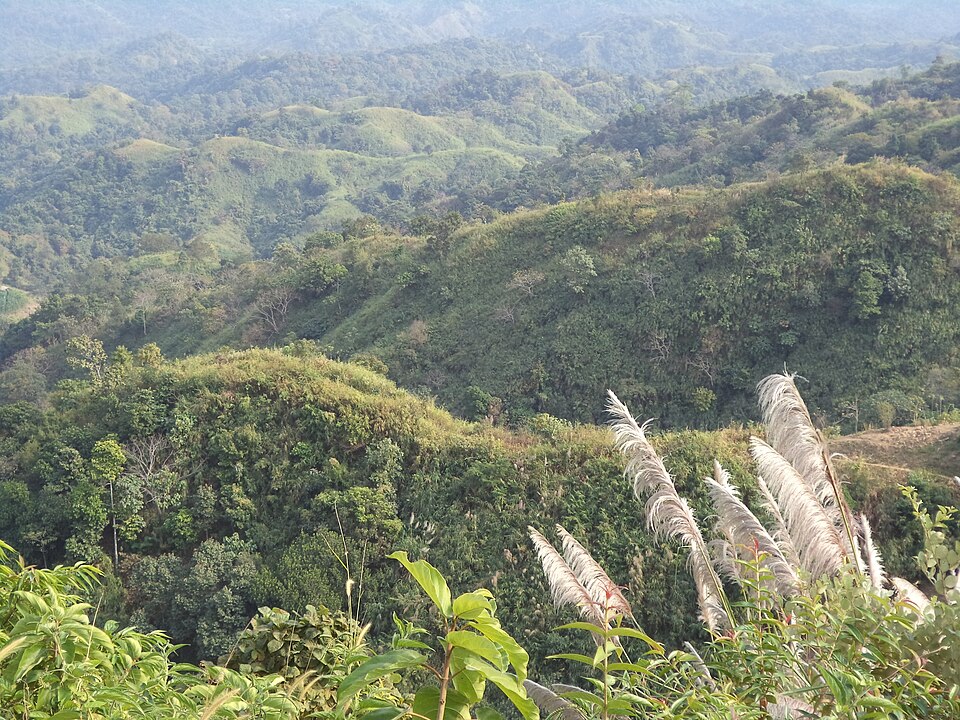
Chandranath Hill
The thousand-foot hill above Sitakunda with the Chandranath Shiva temple on its summit, a Shakti Peeth and the district's great pilgrimage; a steep stair and a forest path up, the sea and the hills from the top, and lakhs of pilgrims at Shiva Chaturdashi.
 Monument and memorialAzim Al Jabber · CC BY 2.5
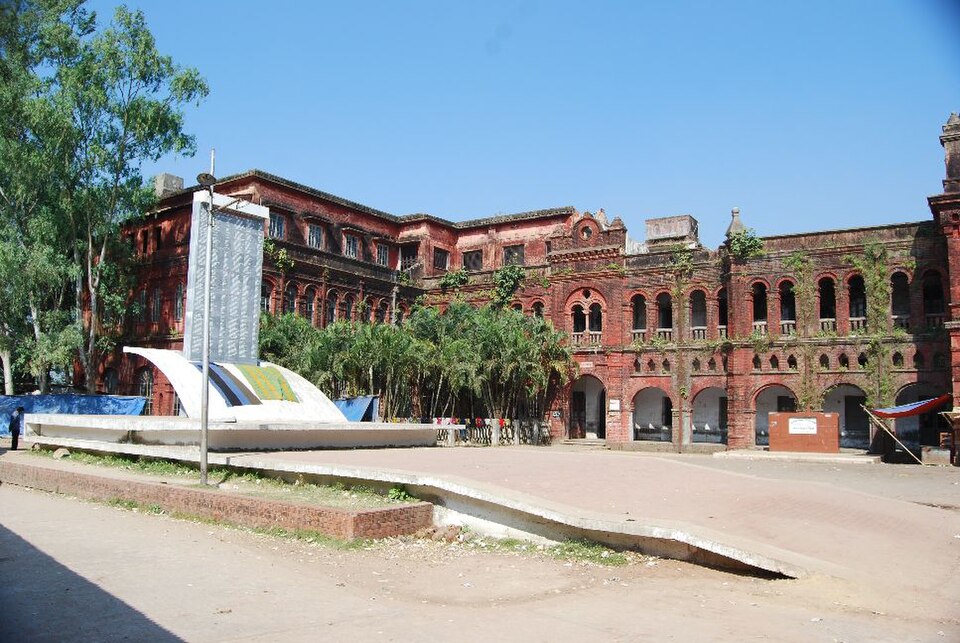
Chattogram Court Building
The red Indo-Saracenic court house of 1898 on Parir Pahar, Fairy's Hill, above the old town: domes, arcades and a long façade that still houses the district courts, with the river and the port spread out below.
 Museum and galleryMoheen Reeyad · CC BY-SA 4.0
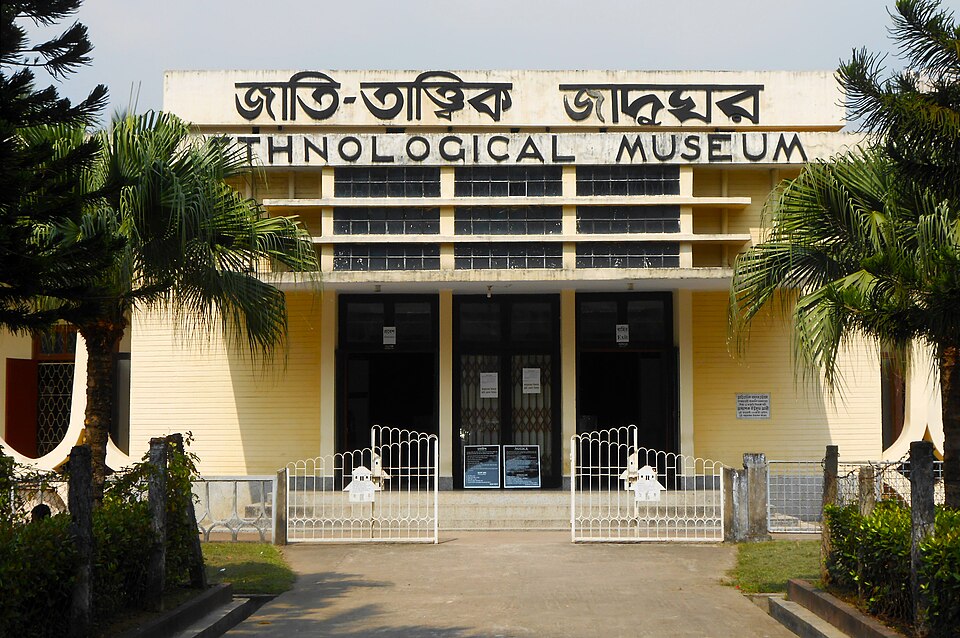
Ethnological Museum
The country's only ethnological museum, at Agrabad: galleries of dress, tools, houses and crafts of the Chakma, Marma, Garo, Santal, Khasi and other communities, open since 1974.
 Park, eco park and picnic spotMoheen Reeyad · CC BY-SA 4.0
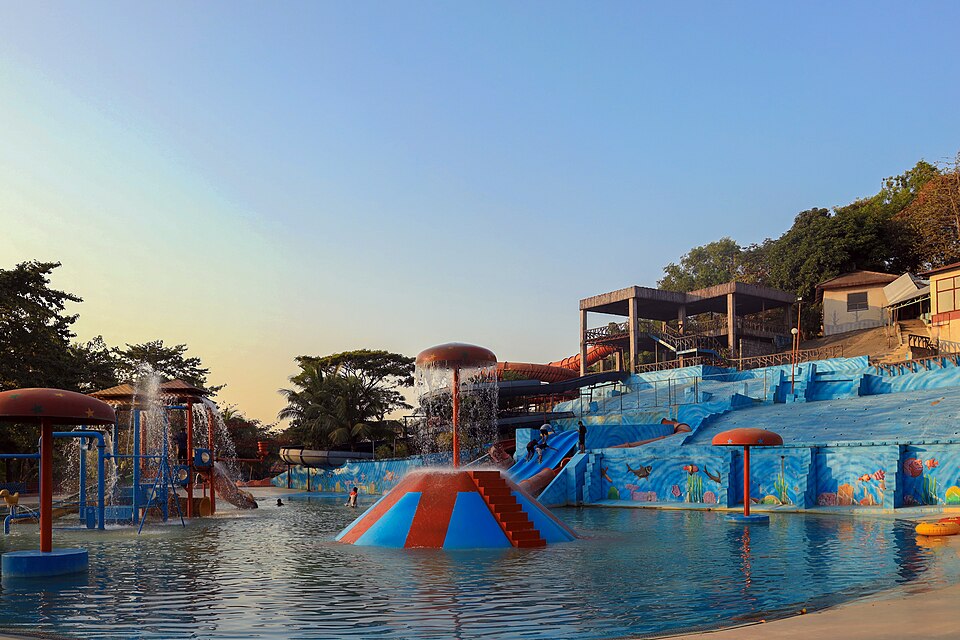
Foy's Lake
A lake dammed between the hills of Khulshi in 1924 by the Assam Bengal Railway, named for its English engineer; now an amusement park, boat rides and a resort around the water, the city's family day out.
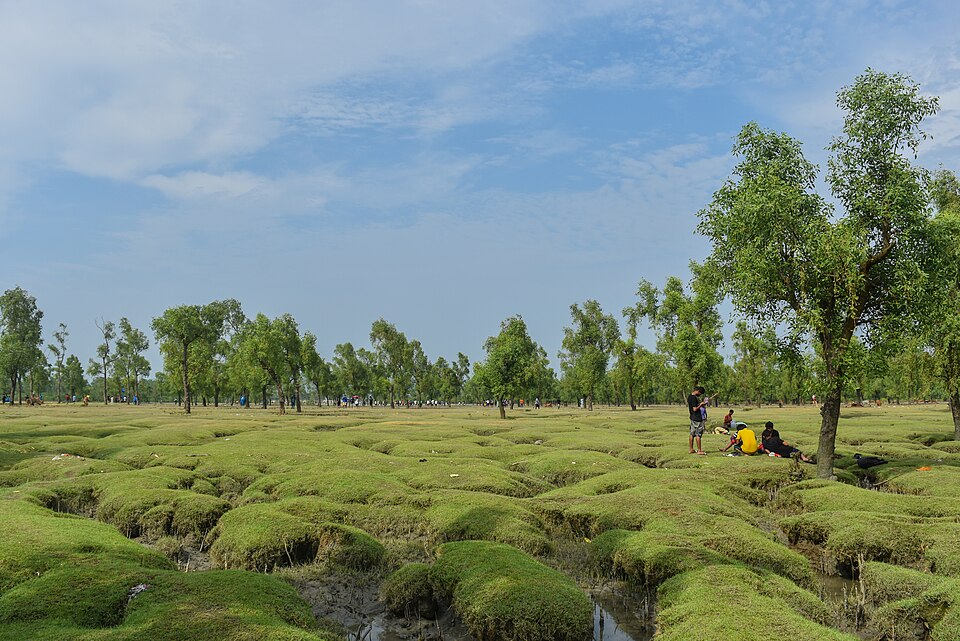 BeachSyed Sajidul Islam · CC BY-SA 4.0
Guliakhali Beach
A beach unlike any other in the country, at Muradpur on the Sitakunda coast: green grass and keora mangroves running in ridges and channels straight into the sea, boats, herons, and a wide sky. Unknown until 2014, now a protected tourism area.
 WaterfallOwais Al Qarni · CC BY-SA 4.0
Khoiyachora Waterfall
The biggest of the Mirsharai waterfalls, nine main cascades one above the other in a forested gorge, reached by a wet, rocky trek up the stream from the highway; at its best from the monsoon to October.
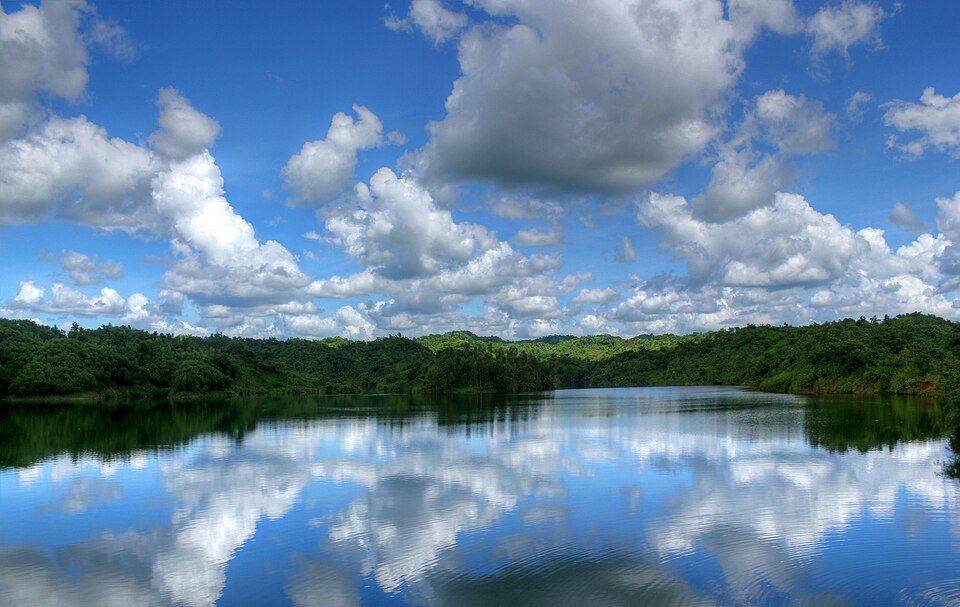 River, lake and haorHasib · CC BY-SA 4.0
Mahamaya Lake
The country's second-largest man-made lake, 11 square kilometres of water held between the Mirsharai hills by an irrigation dam finished in 2010: boats, kayaks, a waterfall at the far end and green ridges all round.
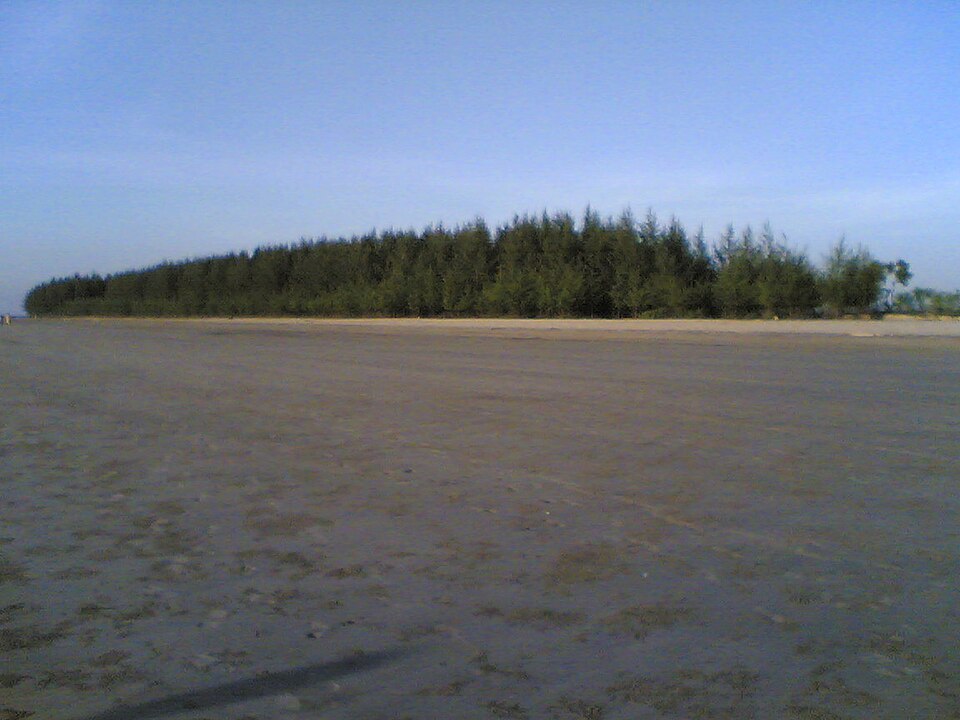 BeachAzim Al Jabber · CC BY-SA 3.0
Parki Beach
Thirteen kilometres of sand and casuarina on the Anwara side of the Karnaphuli mouth, facing Patenga across the water; quieter than the city's beach, with the port's ships on the horizon and, since 2023, the tunnel to bring you there.
 BeachMoheen Reeyad · CC BY-SA 4.0
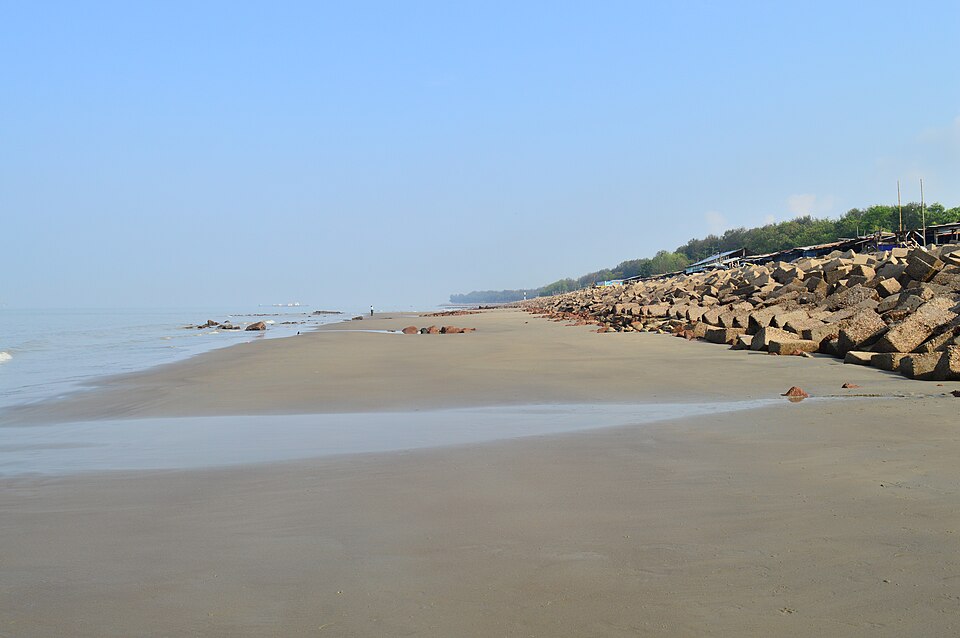
Patenga Sea Beach
The city's beach, 14 km south at the mouth of the Karnaphuli: a long concrete-and-boulder embankment facing the Bay, ships waiting offshore, fried fish stalls and the whole of Chattogram out for the sunset.
 Park, eco park and picnic spotMd Raisul Islam2019 · CC BY-SA 4.0
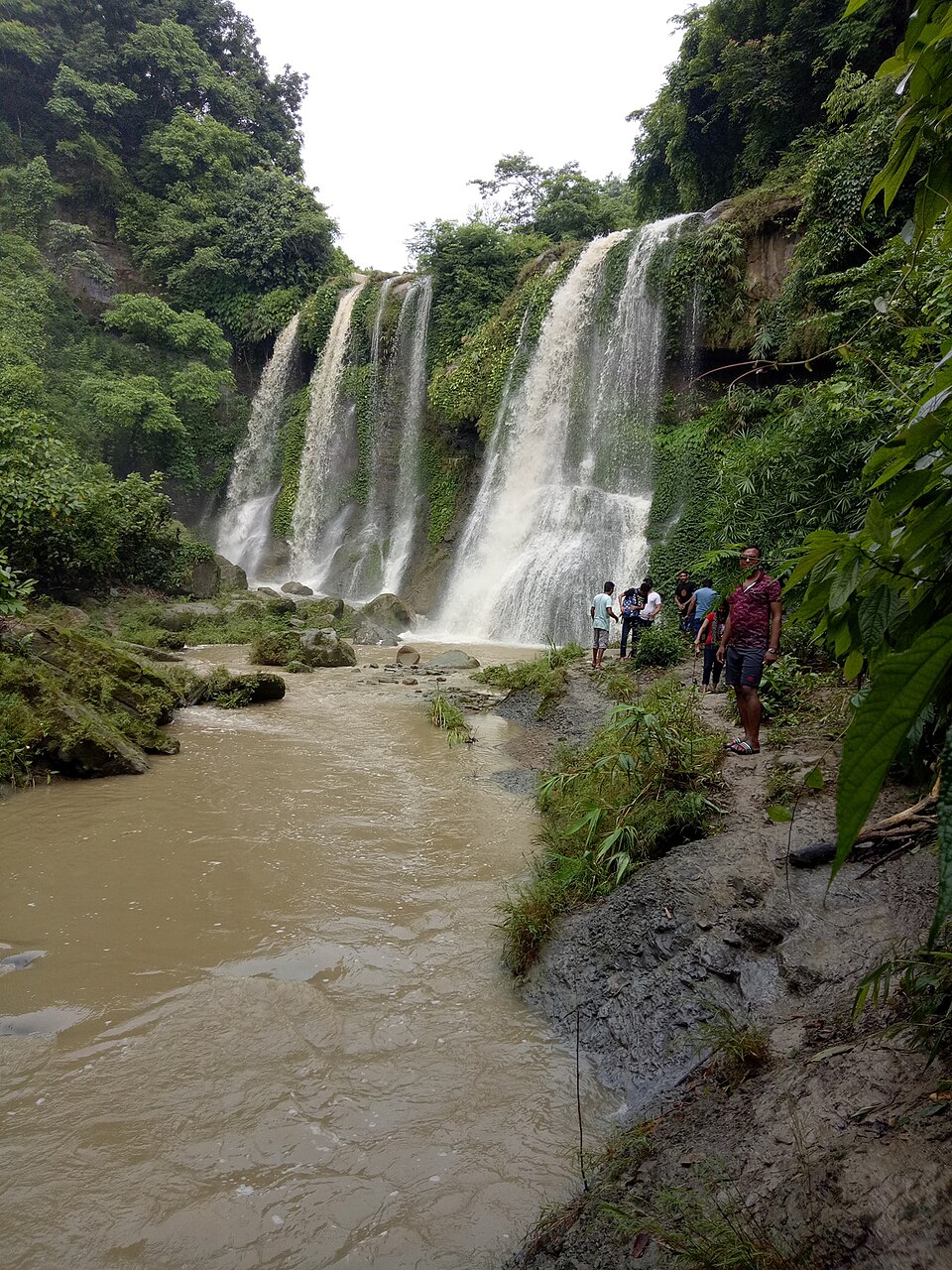
Sitakunda Eco Park
A botanical garden and eco-park on the forested slopes below Chandranath, with the Sahasradhara and Suptadhara waterfalls at the end of its paths, a lake and viewpoints over the coast.
 Monument and memorialAzim Al Jabber(azimiiuc@yahoo.com) · CC BY-SA 3.0
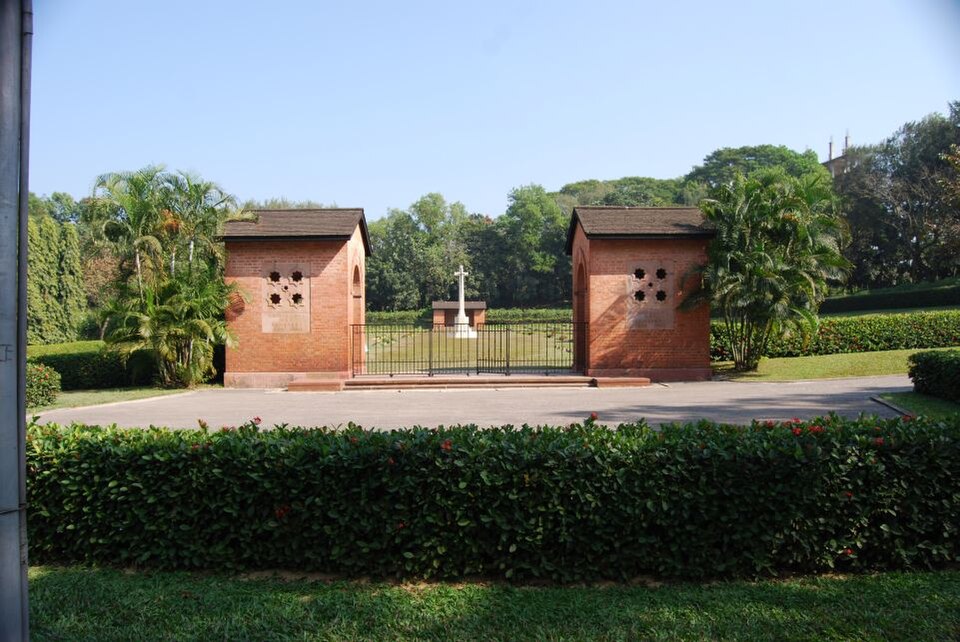
Chittagong War Cemetery
The Commonwealth war cemetery of the Second World War, a lawn of 700-odd graves under the trees at Badsha Mia Road: soldiers and airmen of Britain, India, Africa, Burma, Japan and the Netherlands who died on the Burma front.
Times, fares and opening hours change. Check before you go.
Take this guide offline.
The same guide, every place and photo, on your phone without a connection. Mark the district when you get there.