Known for
- 1
A lost city of mosques.
In the 1400s a Turkic governor-saint, Khan Jahan Ali, cleared the Sundarbans here and built Khalifatabad: brick mosques, tombs, roads and huge tanks. The forest swallowed it after his death, and what survives is now the UNESCO-listed Mosque City of Bagerhat.
- 2
The Sixty Dome Mosque.
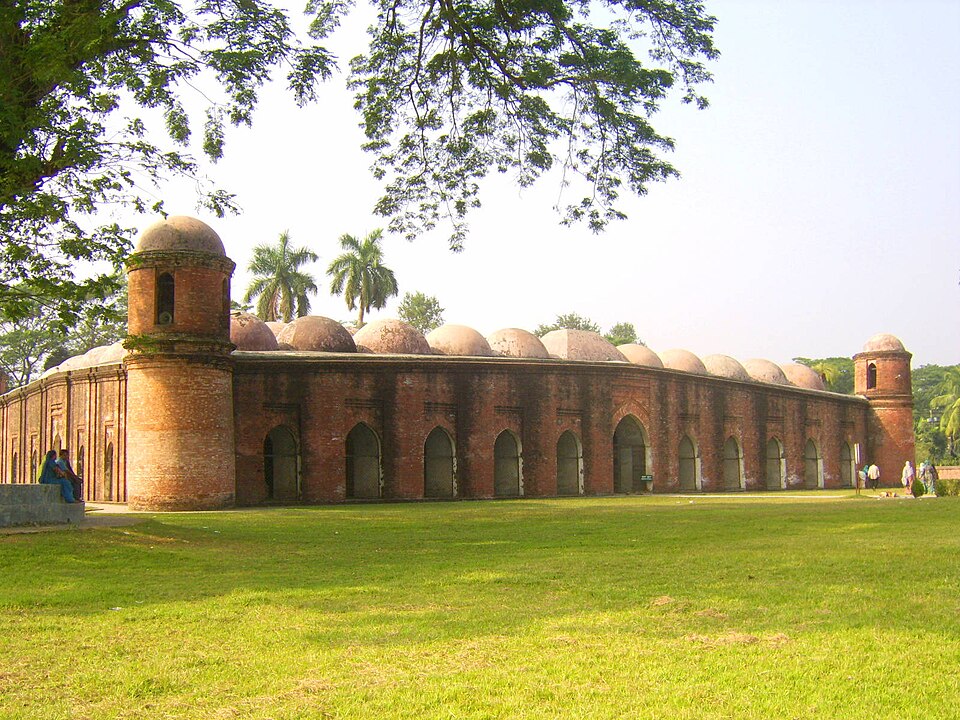
The largest mosque of the Bengal Sultanate: 60 stone pillars, 81 domes and a hut-shaped roofline, standing in open fields by the Ghora Dighi.
- 3
The saint, the crocodiles and the fair.
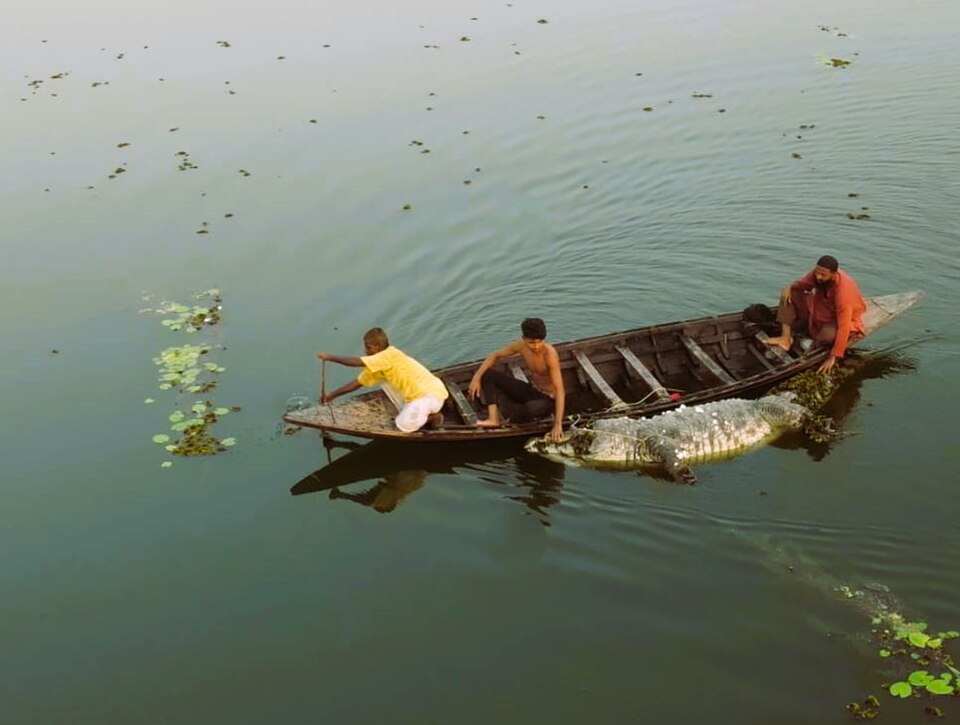
Khan Jahan's tomb still draws pilgrims of every faith. Freshwater crocodiles have lived in his tank for centuries, and the full moon of Chaitra brings a three-day fair of over a hundred thousand people.
- 4
Gateway to the Sundarbans.
From Mongla port, boats go into the world's largest mangrove forest: Karamjal's crocodile centre in an hour, Harbaria's deep-forest trail in a day, and Katka, Kochikhali and the Rash Mela at Dublar Char on a cruise.
- 5
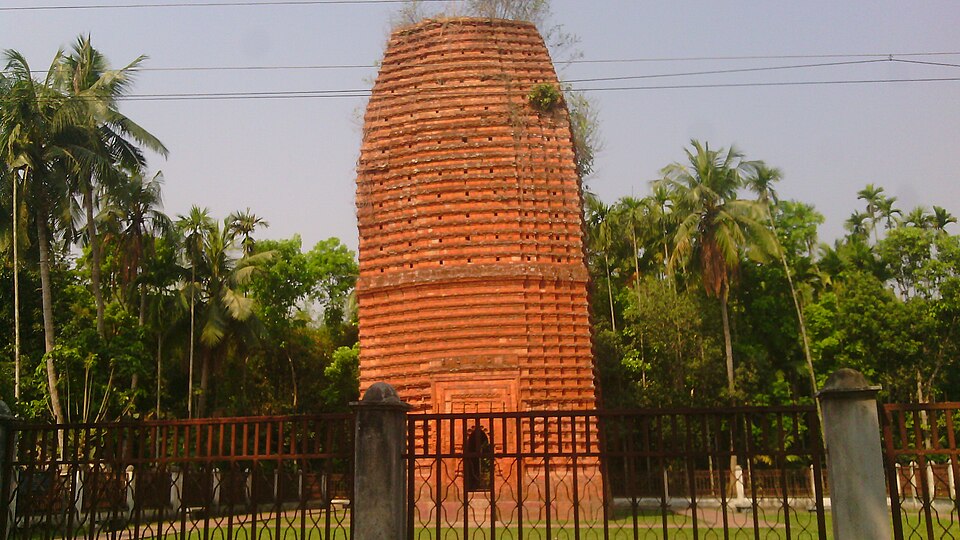
A terracotta tower by the Bhairab.
Kodla Math, an 18-metre brick memorial from the 1600s, rises alone above the village of Ayodhya, every wall carved.
- 6
Chui jhal and shrimp.
The cooking of the southwest: beef or mutton simmered with the peppery chui vine, and the bagda and golda shrimp this coast is famous for.
Best season
GoodFairNov–Feb
- Khan Jahan Ali's fair Three days from the full moon of Chaitra (late March or early April)
- Rash Mela at Dublar Char Rash Purnima in Kartik (November), a dawn dip in the sea
- Sundarbans closed June to August, the breeding season: no visitors in the forest
November to February is the season. Days are mild (around 13 to 25 °C), the air is dry and the rivers are calm, which is what Sundarbans boat trips need. Wildlife is easiest to see from November to March, when the animals come to the water's edge.
Two festivals are worth planning around. The fair at Khan Jahan Ali's tomb runs for three days from the full moon of Chaitra (late March or early April; the dates move with the moon). The Rash Mela at Dublar Char falls on Rash Purnima in Kartik (November), when pilgrims take a dawn dip in the sea; the forest department runs a controlled boat route for it.
March to May is hot and humid, up to about 35 °C, with afternoon storms. The mosques are still fine in the early morning; the forest is not at its best.
June to October is the monsoon. July is the wettest month, roads flood and the Pasur turns rough. The forest department closes the Sundarbans to visitors from June to August for the fish and wildlife breeding season, so plan forest trips outside those months.
Getting there
Bus
From Dhaka
4–5 h, ৳650–800 non-AC
Sayedabad, early morning and evening, over the Padma Bridge: Meghna, Banaful, Falguni, Ara, Parjatak, Baleshwar, Hamim, Dola. From Gabtoli: Sohag, Shakura, Hanif, Eagle.
Train
From Dhaka, via Khulna
Under 4 h to Khulna, then 1 h
No station in Bagerhat. Jahanabad Express over the Padma Bridge (Sundarban Express takes the old route, about 7½ h); then a bus or shared CNG from Khulna's bus stand.
Air
Via Jashore airport
2½–3 h by road after landing
About 110 km away, through Khulna, by car or bus.
Launch
Into the Sundarbans from Mongla ghat
৳1,000–1,500 a boat to Karamjal and back
Mongla is 50 km south of the town, an hour by bus. Engine boats take ten; longer trips go on launches through a tour operator, who handles the forest permit.
Getting around
Between the mosques
A reserved battery rickshaw for a morning costs little
The old city is 3–5 km west of the bus stand on the Khulna road; the Sixty Dome Mosque and the tomb are 6 km apart.
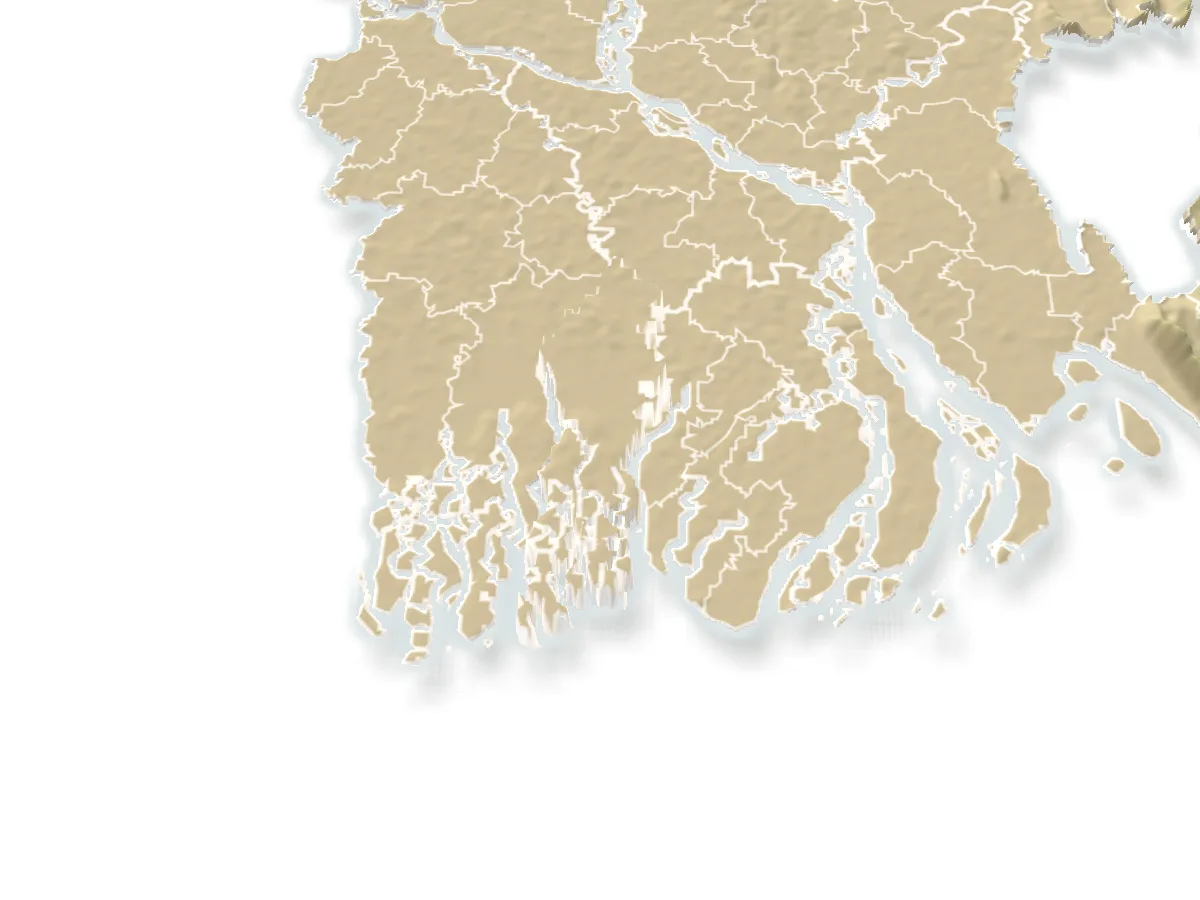
Bagerhat is about 300 km south-west of Dhaka and 30 km east of Khulna. Since the Padma Bridge opened, it is a half-day trip from the capital.
By bus from Dhaka. Direct buses leave Sayedabad terminal from early morning and again in the evening and cross the Padma Bridge; the ride takes about 4 to 5 hours. Operators on the route include Meghna, Banaful, Falguni, Ara, Parjatak, Baleshwar, Hamim and Dola, and from Gabtoli, Sohag, Shakura, Hanif and Eagle. Non-AC fares run roughly 650 to 800 taka; check the counter, as fares change. Buses that run on to Mongla (Sundarban and Diganta Paribahan among them) also stop in Bagerhat.
By train. There is no station in Bagerhat town. Take a train to Khulna: the Jahanabad Express crosses the Padma Bridge in under four hours, while the Sundarban Express takes the older route in about seven and a half. From Khulna's bus stand, local buses and shared CNGs reach Bagerhat in 45 minutes to an hour. A Khulna to Mongla commuter train opened in 2024 and stops at Katakhali and Chulkati on the way; ask at Khulna station whether it is running.
By air. The nearest airport is Jashore, about 110 km away; from there it is two and a half to three hours by road through Khulna.
Getting around. The old city lies 3 to 5 km west of the bus stand along the Khulna road. Battery rickshaws and CNGs shuttle between the Sixty Dome Mosque, the tomb and the other mosques, and a reserved one for a morning costs little. Mongla is 50 km south of the town, about an hour by bus. Boats for the Sundarbans leave from Mongla's ferry ghat: an engine boat for ten people costs around 1,000 to 1,500 taka for the Karamjal return; longer trips go on launches arranged through a tour operator, who handles the forest permit.
Local food
Chui jhal goshtMust try
Beef or mutton cooked slowly with the peppery chui vine
Chingri malaikariMust try
Bagda or golda shrimp in coconut milk, from the Rampal farms
Sundarbans honey
Kholisha honey, gathered in April; buy from a forest office or a known cooperative
Golpata fruit
The jelly-like seeds of the nipa palm, from street vendors in season
Dublar Char shutki
Sun-dried loitta, churi and small shrimp, for a fierce bhorta
Gurer sandesh
Winter sandesh with date-palm jaggery from the town's sweet shops
Chui jhal. The dish of the southwest. Chui is a climbing pepper vine whose woody stem is chopped into beef or mutton and cooked slowly until the gravy turns hot and fragrant in a way no chilli can copy. Nobody in Bagerhat or Khulna cooks red meat without it. Roadside hotels serve it with plain rice and a thin dal; the ones at Chuknagar on the Khulna road are famous for it.
Shrimp. Rampal and Fakirhat are shrimp country: bagda (tiger prawn) from the brackish farms and golda (giant river prawn) from fresher water. Look for chingri malaikari in coconut milk, or shrimp cooked with ground coconut.
From the Sundarbans. Honey from the forest: kholisha honey, gathered in April, is the prized one. Buy it from a forest office or a known cooperative, since diluted honey is common. Golpata fruit, the jelly-like seeds of the nipa palm, sold by street vendors in season. And shutki, the sun-dried loitta, churi and small shrimp from Dublar Char, which cooks into fierce bhortas.
The rest of the table. Coconut, betel nut and rice are the district's crops, so coconut turns up in curries and in narkel naru. Sweet shops in the town make sandesh and rosogolla, and gurer sandesh with date-palm jaggery in winter.
Places to see
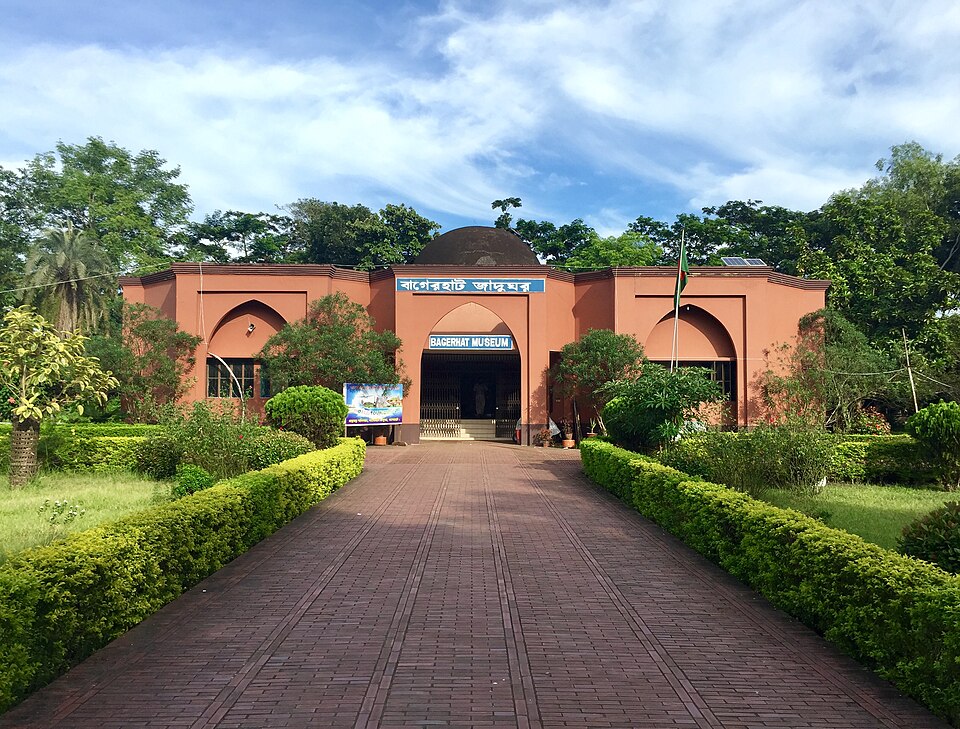 Museum and galleryAminul joy · CC BY-SA 4.0
Bagerhat Museum
A small archaeology museum beside the Sixty Dome Mosque: inscriptions, pottery, terracotta and the story of Khalifatabad in three galleries.
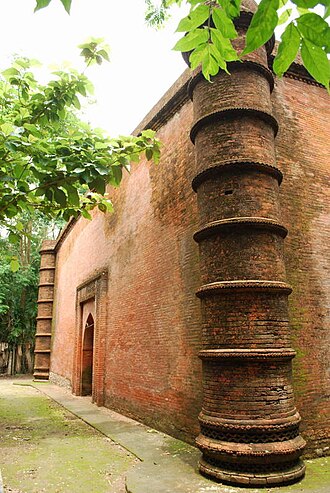 Mosque and shrineDiego Tirira from Quito, Ecuador · CC BY-SA 2.0
Bibi Begni Mosque
A heavy single-domed mosque on the far bank of the Ghora Dighi, said to be named for Khan Jahan's wife, with walls three metres thick and Persian-style brick lattice.
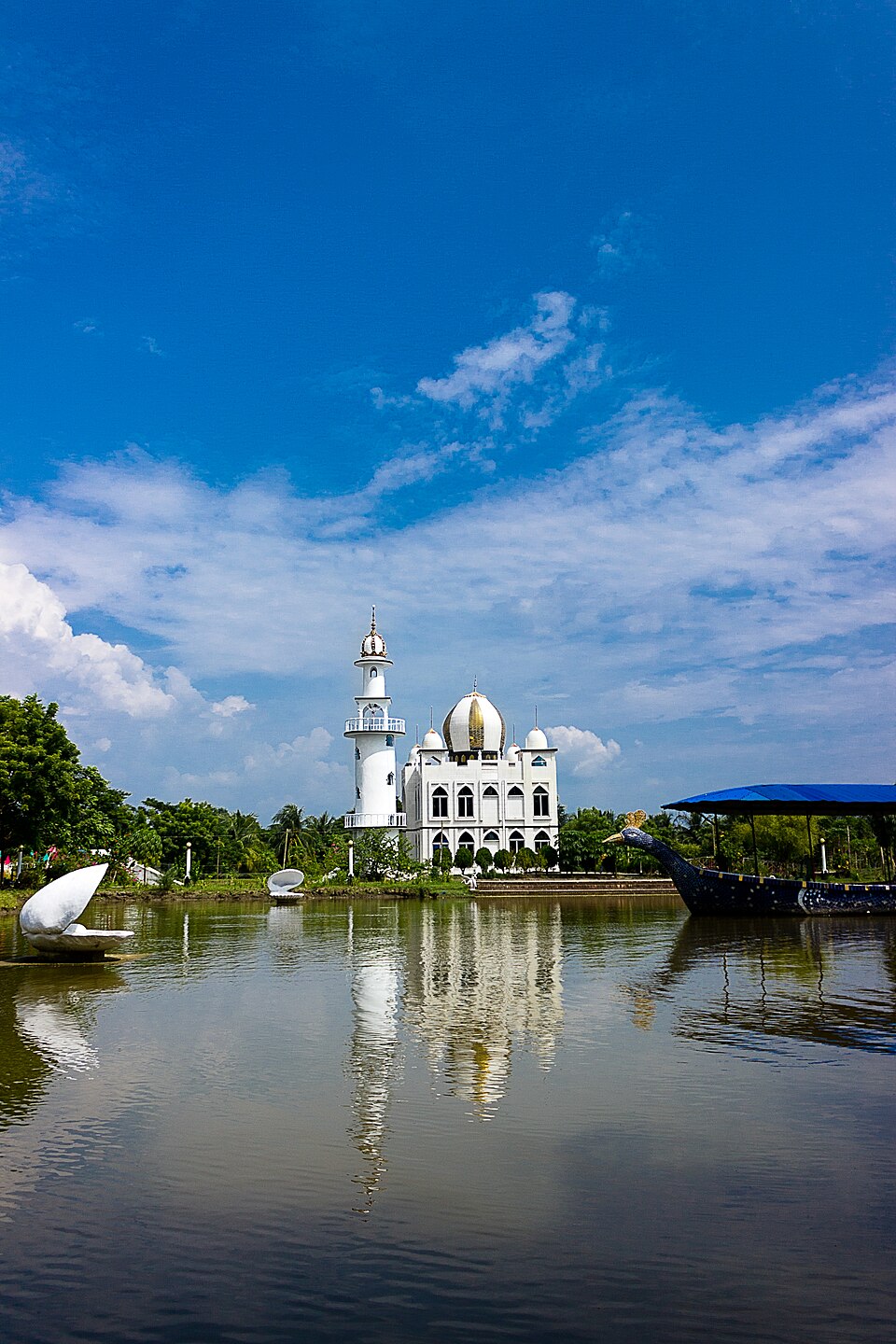 Park, eco park and picnic spotNayan Farmer · CC BY-SA 4.0
Chandra Mahal Eco Park
A 35-acre private park at Ranjitpur: a Taj-like palace on a lake reached through a glass tunnel, a hoard of antiques, gardens, a mini zoo and picnic lawns.
 Mosque and shrineyeowatzup · CC BY 2.0
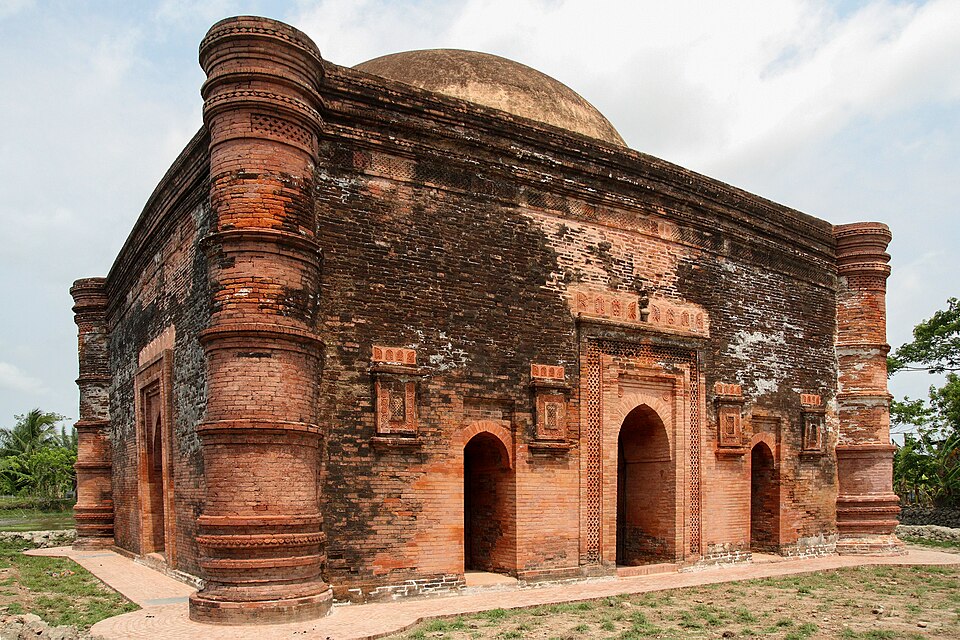
Chunakhola Mosque
A lone single-domed mosque standing in the middle of rice fields, the most photographed small building of the mosque city.
 Forest and mangrovemohammad fahim · CC BY-SA 4.0
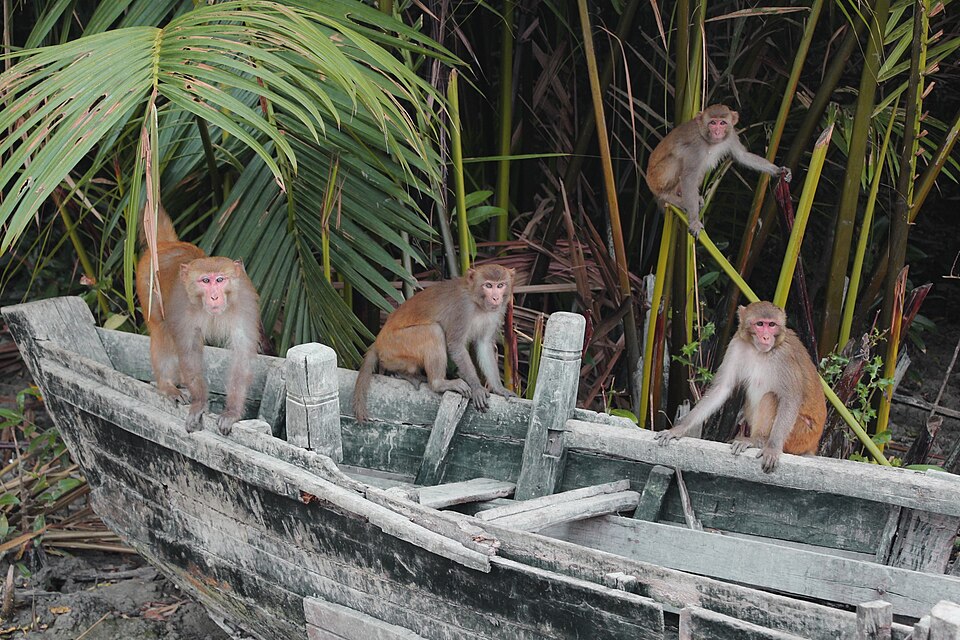
Dhangmari
A forest-edge village and sanctuary just below Mongla where you can paddle the narrow mangrove canals in a wooden boat, in silence.
 IslandNayeem16736665 · CC0
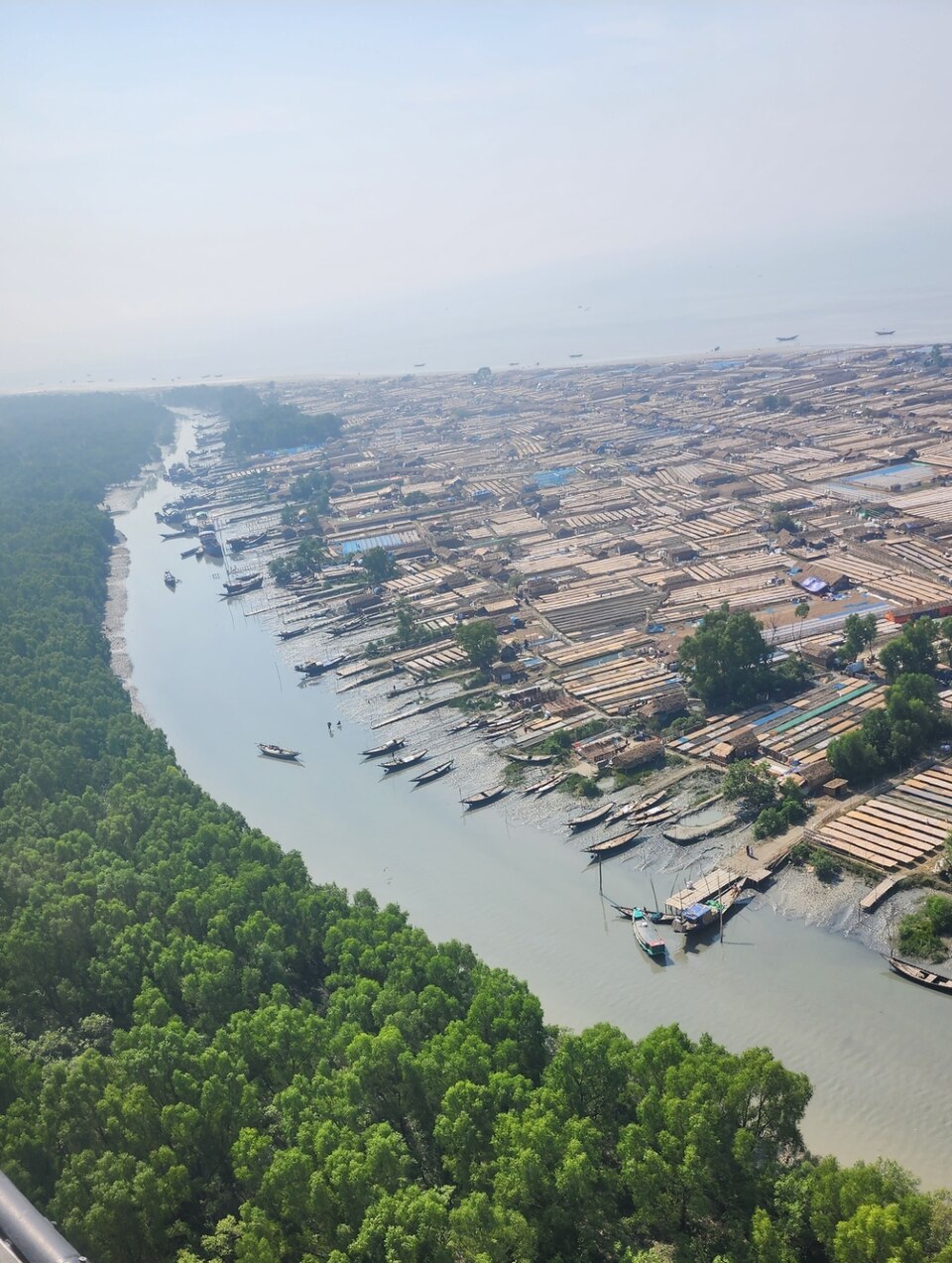
Dublar Char
A fishermen's island at the sea edge of the Sundarbans, a city of drying fish for five months a year, and the site of the Rash Mela, when pilgrims bathe in the sea at the November full moon.
 River, lake and haorAnup Sadi · CC BY-SA 4.0
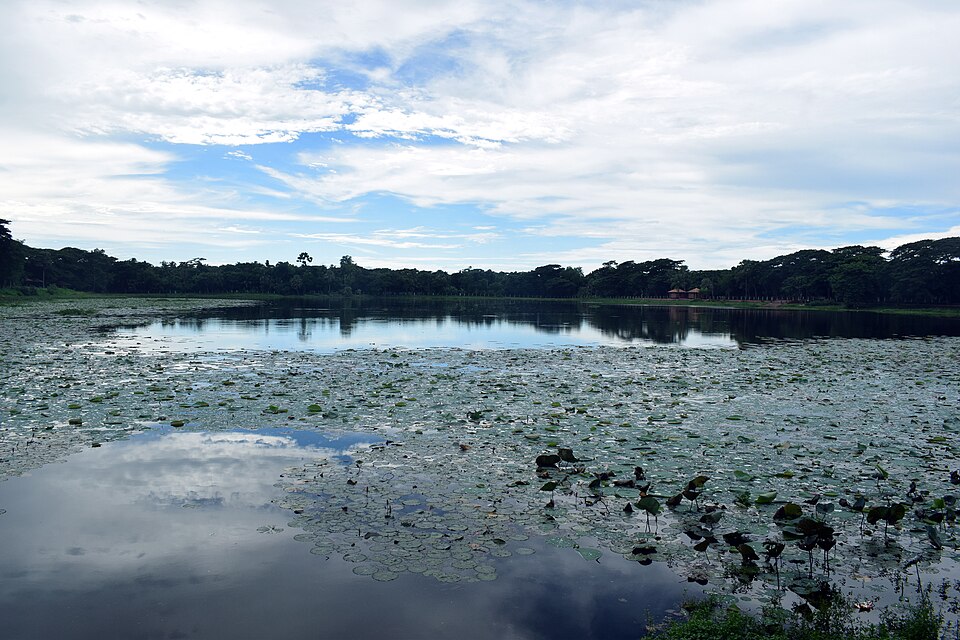
Ghora Dighi
The 'horse tank' beside the Sixty Dome Mosque, a quarter-mile sheet of water dug in the 1400s, with the mosque mirrored on its east bank and Bibi Begni on its west.
 Forest and mangroveHiroki Ogawa · CC BY 3.0
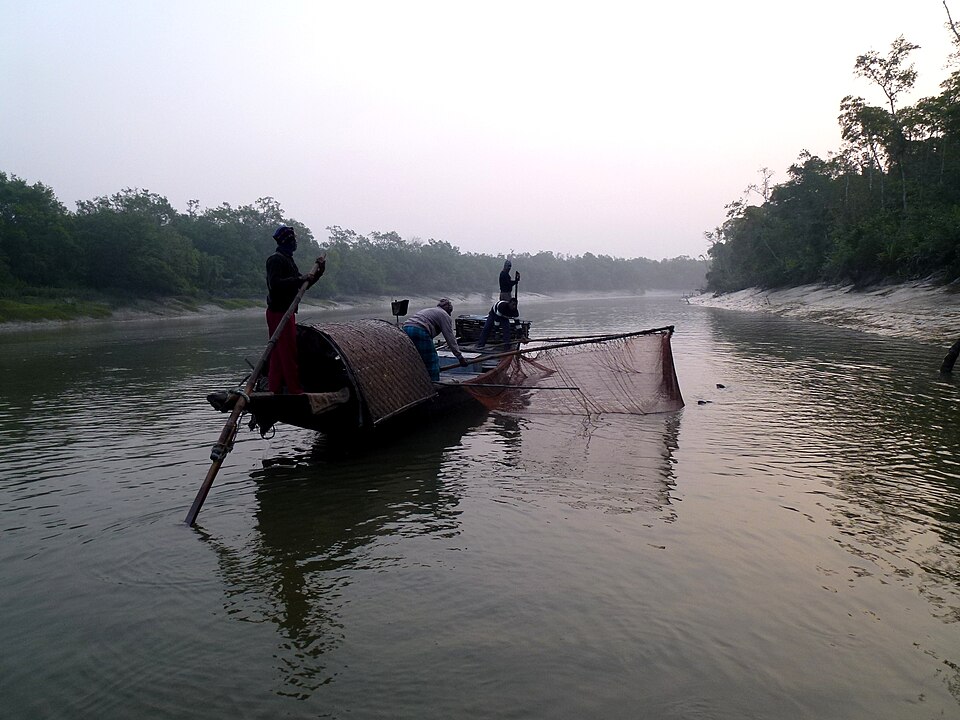
Harbaria
The deep-forest day trip: a kilometre of boardwalk ending at a watchtower in the Chandpai range, two hours down the Pasur from Mongla, with a permit and an armed guard.
 Wildlife and national parkUmme Saimum · CC BY-SA 4.0
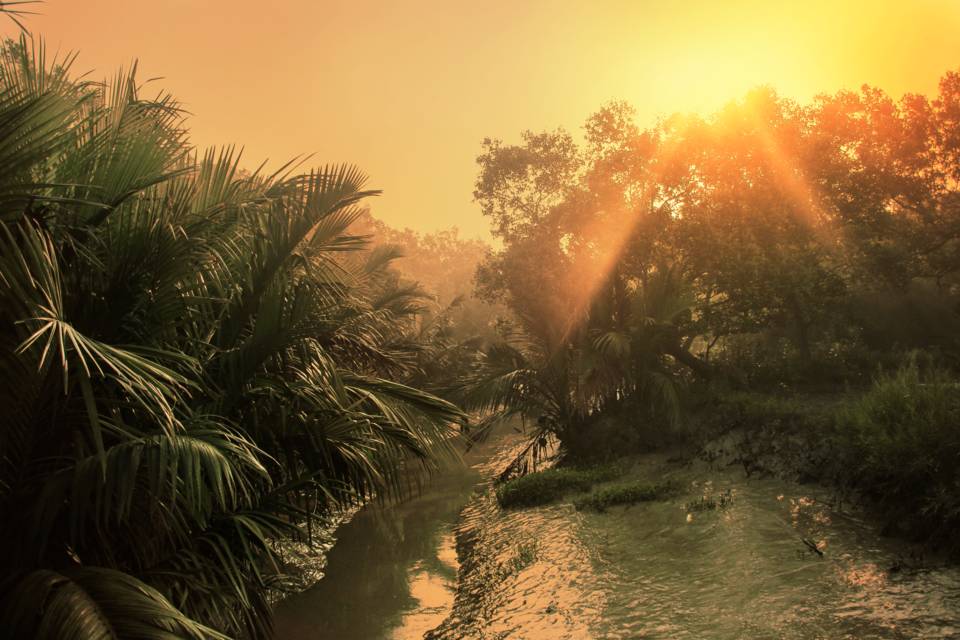
Karamjal
The forest department's gateway to the Sundarbans, an hour by boat from Mongla: a crocodile breeding centre, deer, monkeys, a wooden trail through the mangroves and a watchtower.
 BeachMd. Rifat Hasan Jihan · CC BY-SA 4.0
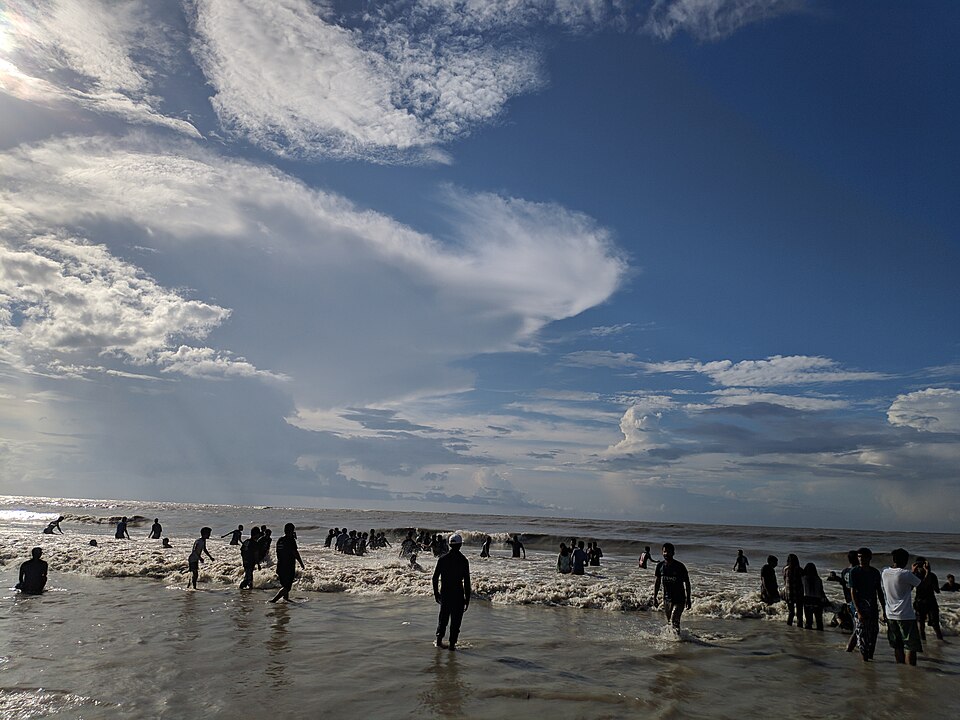
Katka and Jamtola beach
The heart of the Sundarbans East sanctuary: a forest station, a watchtower over the deer meadows, and a walk through the trees to an empty beach on the Bay of Bengal.
 Mosque and shrineMd.Mijanur Rahman1985 · CC BY-SA 4.0
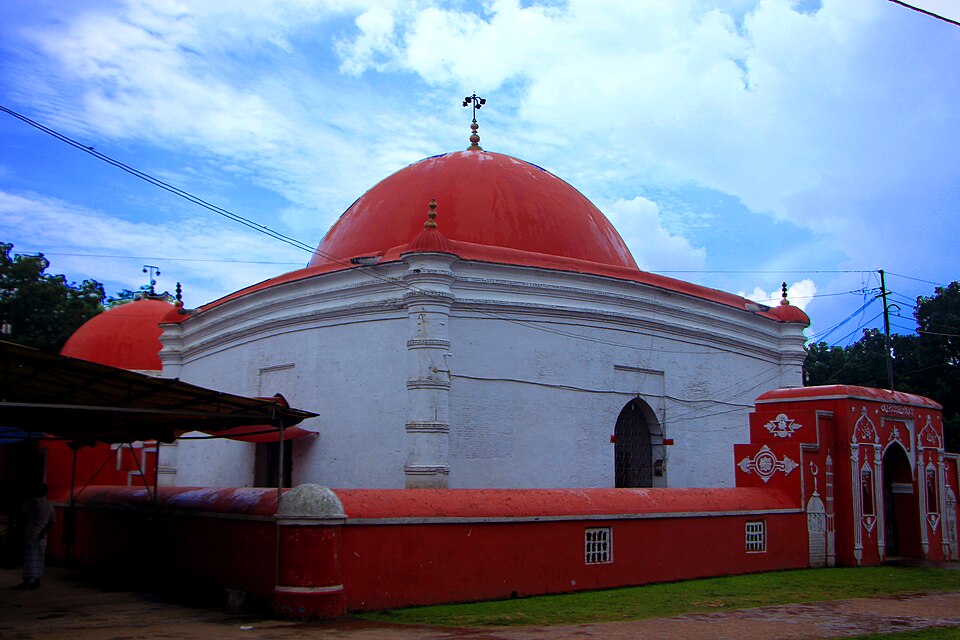
Tomb of Khan Jahan Ali
The single-domed mausoleum of the saint who founded Bagerhat, on a rise above his crocodile tank; a living shrine where people of every faith come to pray and tie a wish.
 Beachমঈনুল · CC BY-SA 3.0
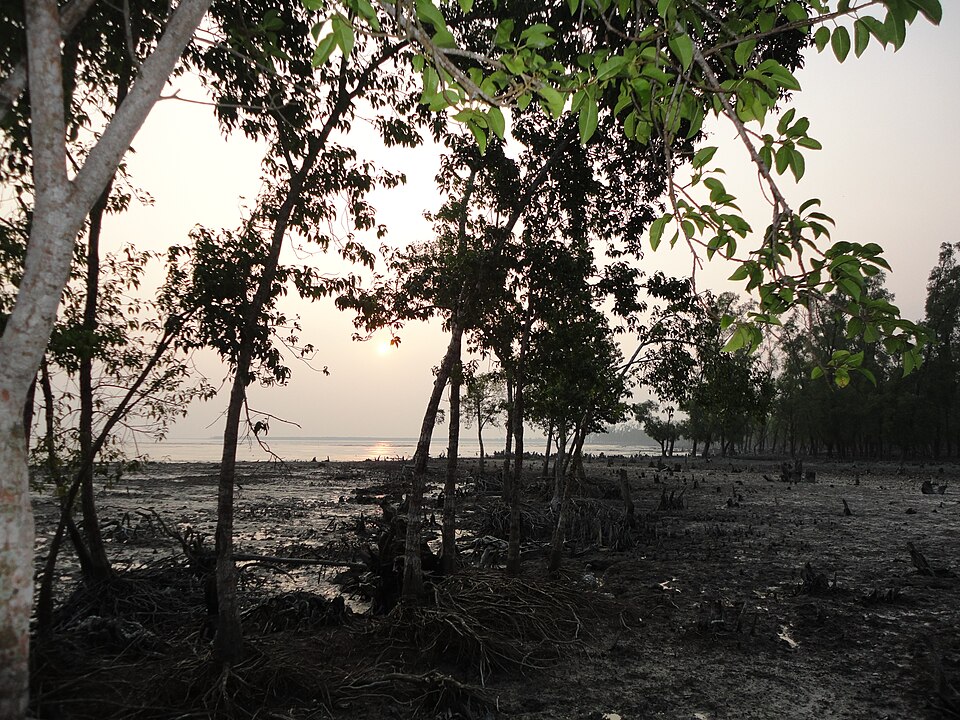
Kochikhali
The easternmost forest station of the Sundarbans, a few kilometres from Katka: a rest house, a beach where the Baleshwar meets the sea, and some of the best tiger country in the forest.
 Hindu templesumon talukder · CC BY-SA 3.0
Kodla Math
An 18-metre terracotta tower from the 1600s rising alone above the fields of Ayodhya village, a memorial raised, the story goes, by Raja Pratapaditya for his guru.
 City and landmarkFrancis Voon · CC BY 2.0
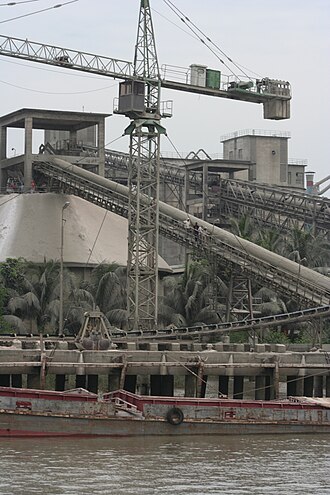
Mongla and the Pasur riverfront
Bangladesh's second seaport, a frontier town on the Pasur where cargo ships, fishing boats and Sundarbans launches share one wide brown river.
 Fort and palaceBhoboghure · CC BY 4.0
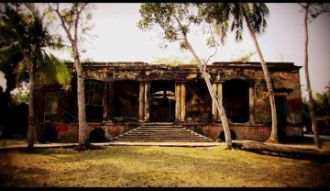
Morrelganj Kuthibari
The ruined indigo planter's house of 1849 that gave Morrelganj its name, and the memory of Rahimullah, the peasant leader killed in the revolt against it.
 Archaeological siteDr Amit Biswas · CC BY-SA 4.0
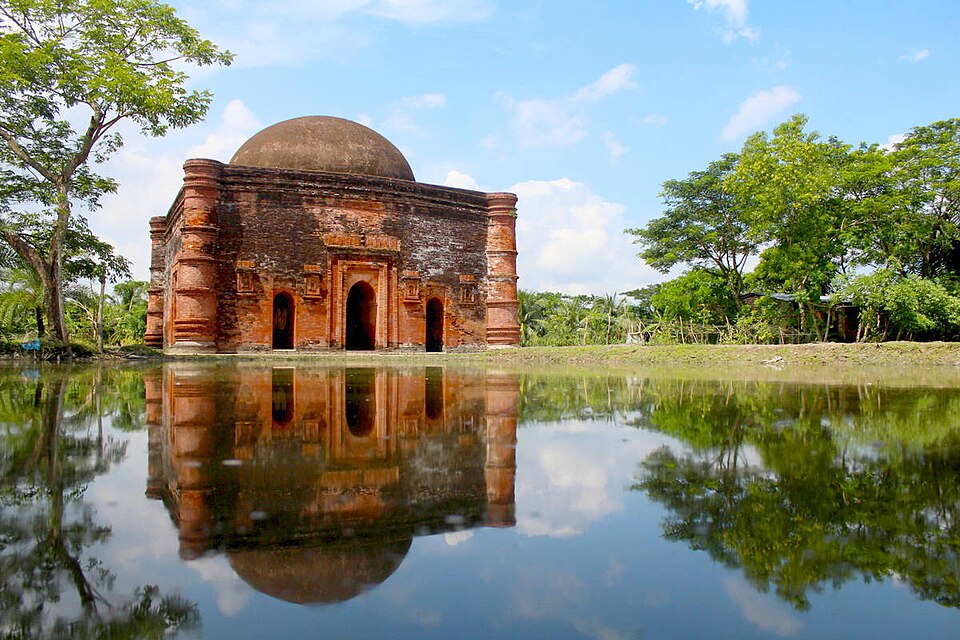
Mosque City of Bagerhat
The UNESCO World Heritage city of Khalifatabad: a 15th-century planned town of brick mosques, tombs, roads and tanks spread over 50 square kilometres of fields.
 Mosque and shrineFaisal Photography · CC BY 4.0
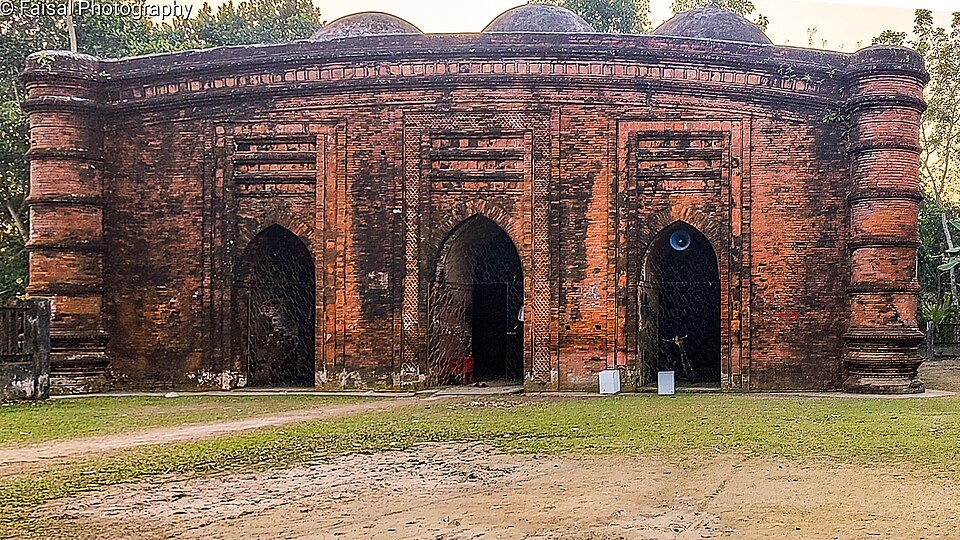
Nine Dome Mosque
A square mosque on the west bank of the Thakur Dighi, one big dome ringed by eight small ones over a hall of terracotta flowers.
 Mosque and shrineAtashi Das 112233 · CC BY-SA 4.0
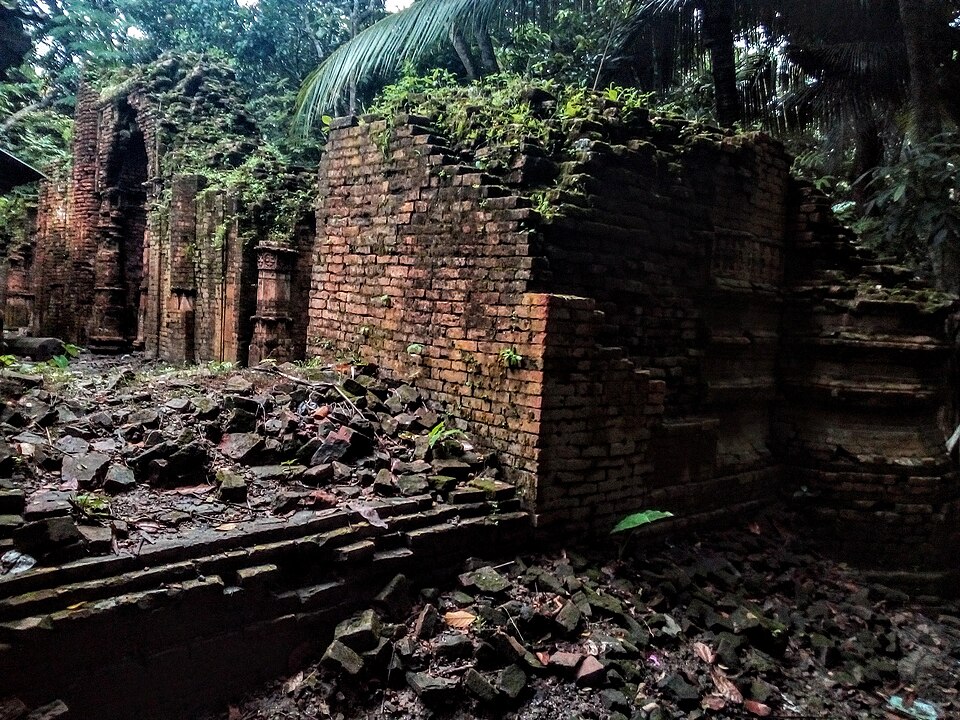
Reza Khoda Mosque
The ruin of a six-domed mosque near the saint's tomb: octagonal corner towers, a great central mihrab and walls open to the sky.
 Mosque and shrineMuhtadir Zarif · CC BY-SA 4.0
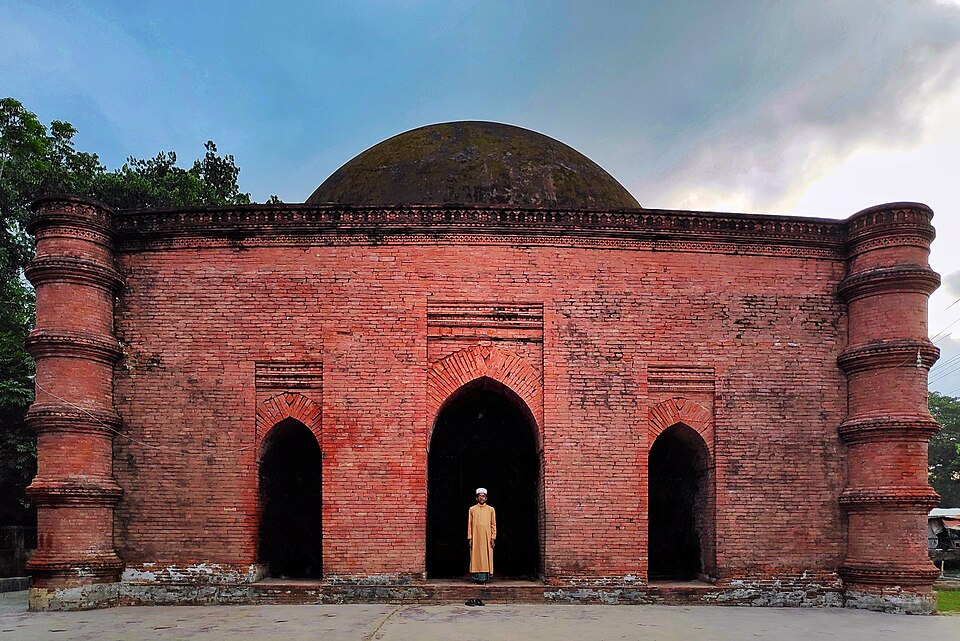
Ronvijoypur Mosque
The biggest single dome in Bangladesh, eleven metres across, over a square brick hall at the turn-off to the saint's tomb.
 Mosque and shrineNasir Khan Saiakt · CC BY-SA 3.0
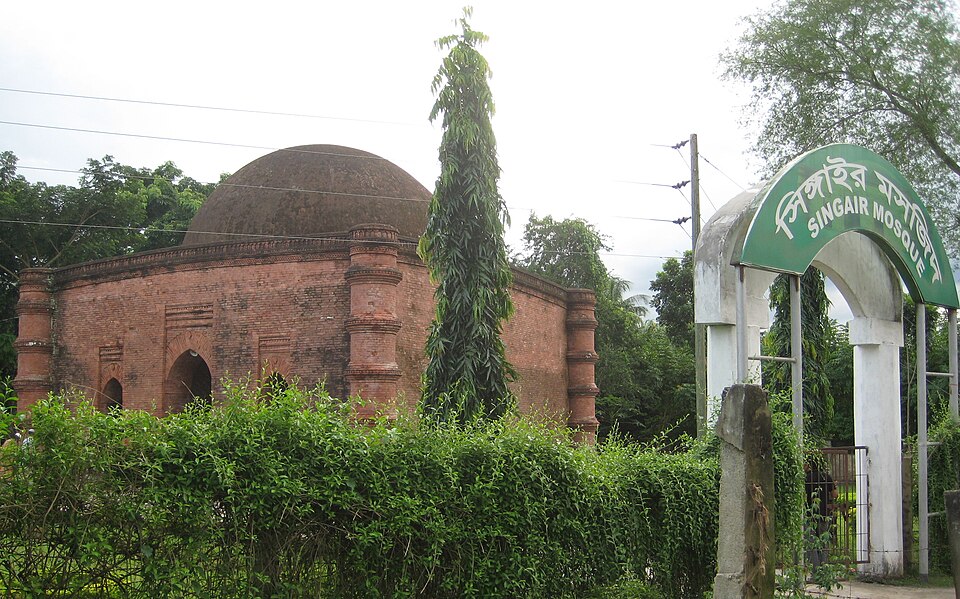
Singair Mosque
A single-domed brick mosque across the highway from the Sixty Dome Mosque, its corner towers and cornice bands still carrying 15th-century terracotta.
 Mosque and shrineBelayet (User:Bellayet) · CC BY 3.0
Sixty Dome Mosque
The largest mosque of the Bengal Sultanate, 60 stone pillars under 81 domes, built by Khan Jahan Ali in the 1400s and the heart of the UNESCO Mosque City.
 Archaeological siteNeilok · CC BY-SA 4.0
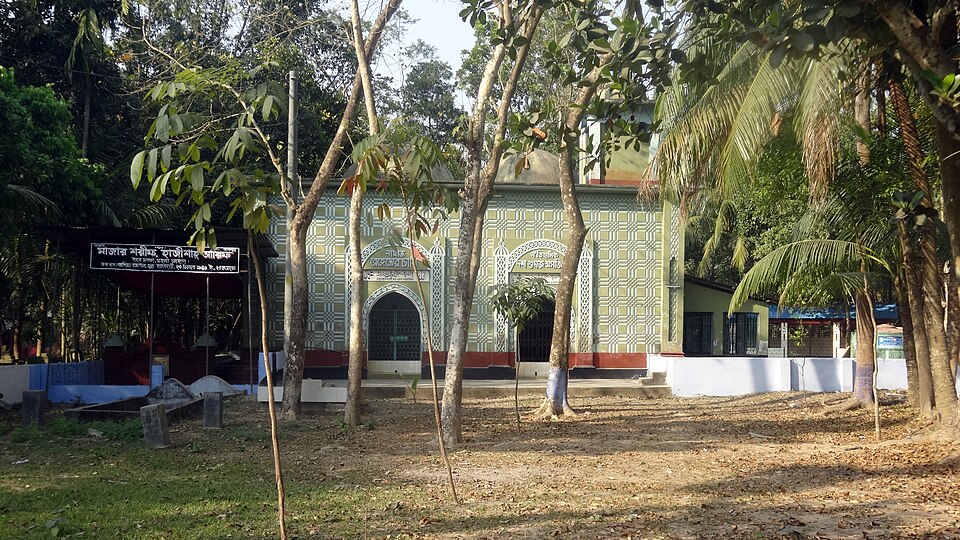
Ten Dome Mosque
The excavated footprint of a ten-domed mosque under a later village mosque, found when locals dug to build and the archaeologists moved in.
 River, lake and haorFaisal Photography · CC BY-SA 4.0
Thakur Dighi and its crocodiles
The 200-acre tank Khan Jahan dug for his town's drinking water, below his tomb, home to freshwater crocodiles for nearly six hundred years.
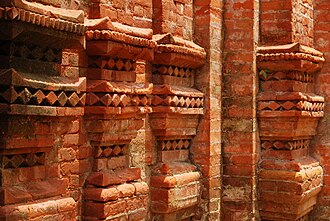 Mosque and shrineDiego Tirira from Quito, Ecuador · CC BY-SA 2.0
Zinda Pir Mosque and tomb
A small walled shrine west of Khan Jahan's tomb: a one-domed mosque with four octagonal minarets, the grave of the 'living saint' and a dome repaired in 2002.
Sources 18
Times, fares and opening hours change. Check before you go.
Take this guide offline.
The same guide, every place and photo, on your phone without a connection. Mark the district when you get there.