Mosque and shrine, Bagerhat
Zinda Pir Mosque and tombজিন্দা পীর মসজিদ ও মাজার
- Time needed
- Fifteen minutes.
- best months
- Nov–Feb
- Cost
- Free.
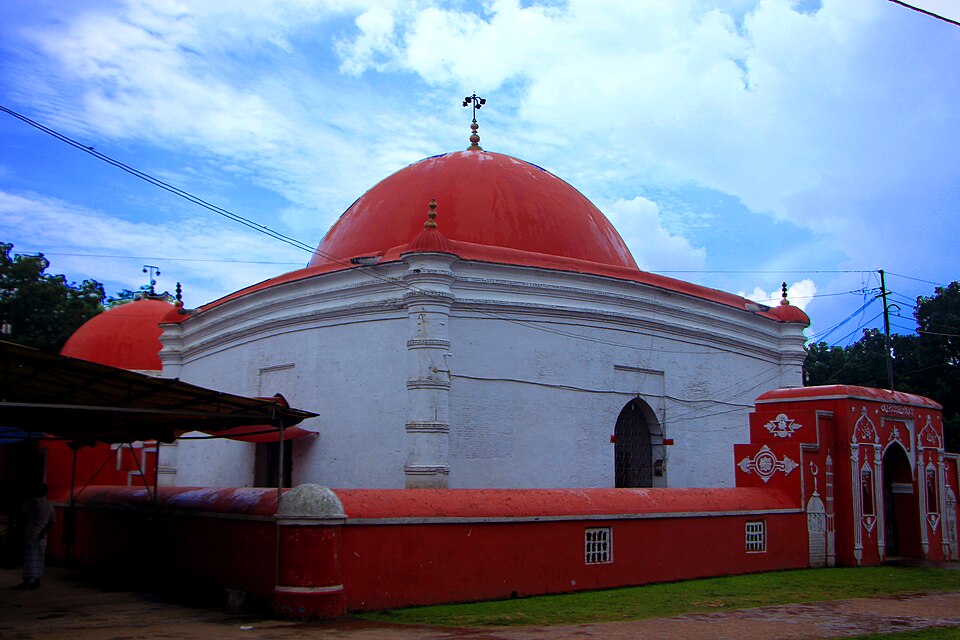
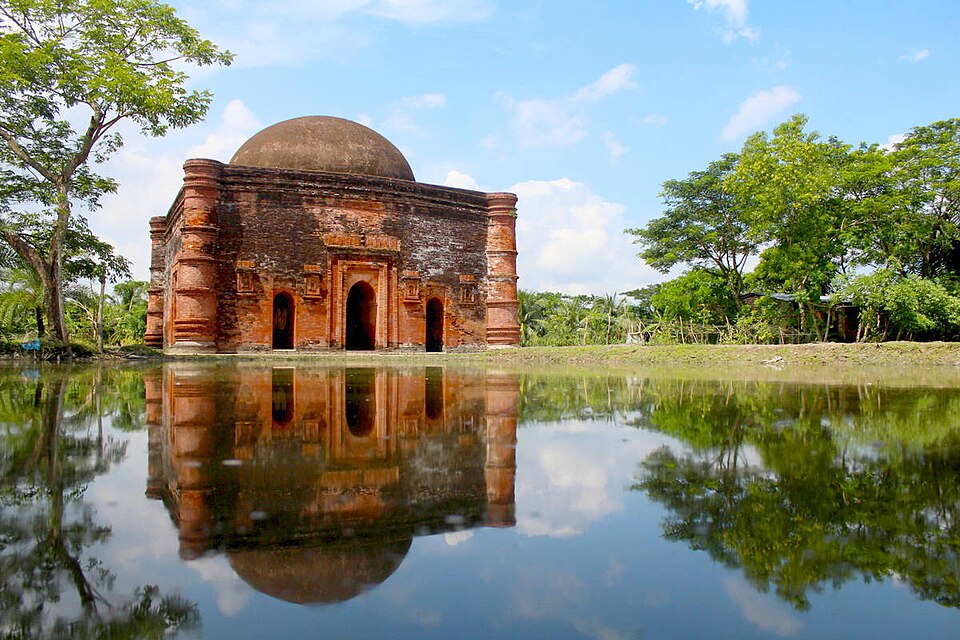
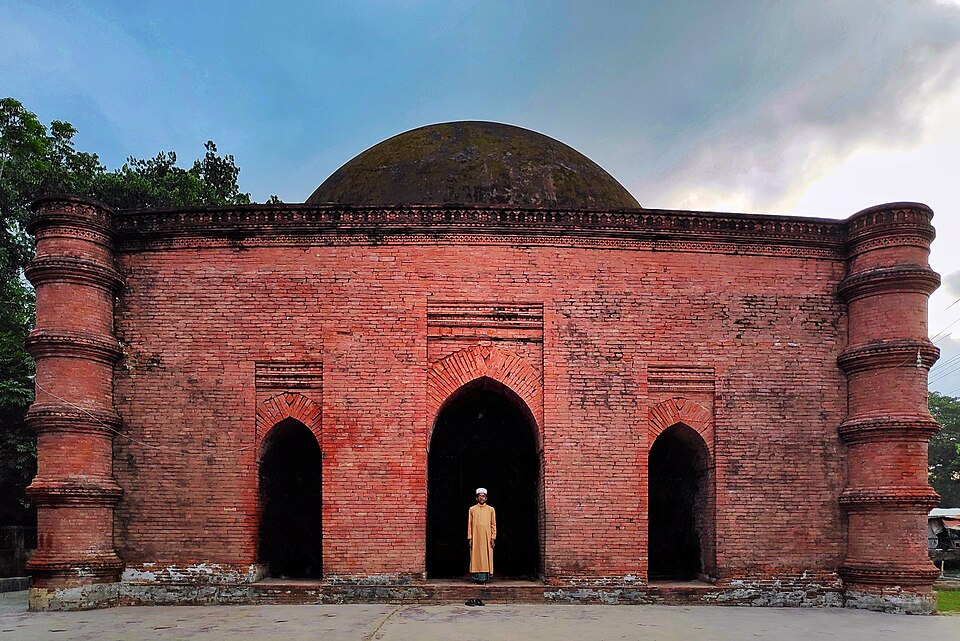
A small walled shrine west of Khan Jahan's tomb: a one-domed mosque with four octagonal minarets, the grave of the 'living saint' and a dome repaired in 2002.
Plan your visit
- Opening
- Daylight hours; the mosque closes to visitors at prayer times.
At a glance
- Period
- Early 16th century, after the Khan Jahan style
- Walls
- About 1.5 m thick
About
Down the lane west of the great tomb, inside a low boundary wall, is a quieter shrine. Nobody is certain who Zinda Pir, "the living saint", was; the histories offer Ahmad Khan, Ahmad Ali and Syed Ahmad Shah, and tradition makes him a companion or successor of Khan Jahan. His grave is here, with his son's to the north, and in the north-west corner of the enclosure stands his mosque.
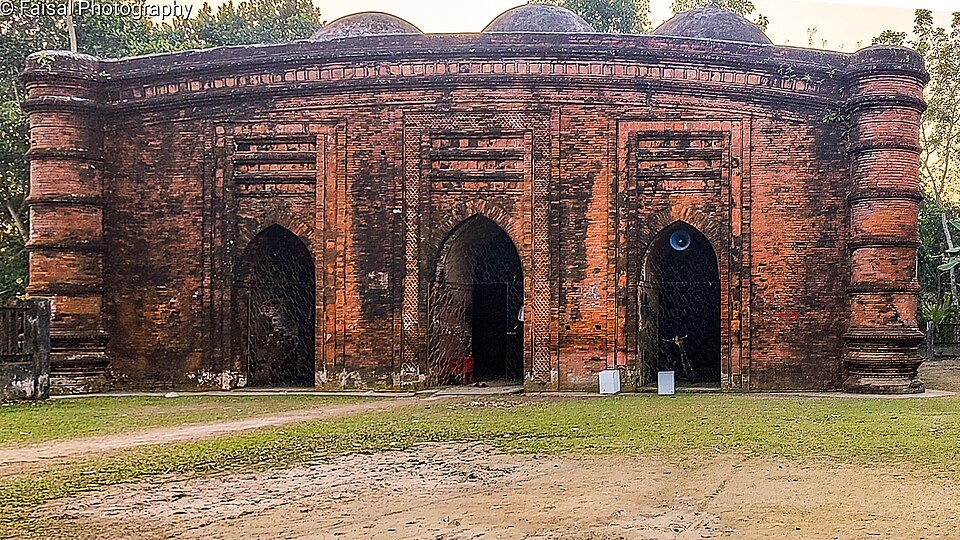
It is a single-domed building of the generation after the city's founder: the walls are thinner, about 1.5 metres, the corner towers are octagonal with decorative bands rather than the round bastions of the Khan Jahan style, and historians place it in the reign of Husain Shah or his son Nusrat Shah, in the early 1500s. Three doors on the east, three mihrabs on the west, panels of terracotta relief still on the outside. The dome had fallen in and was rebuilt in 2002. It is a working mosque and a place of prayer for the saint; the mood is domestic, a few families on the steps, a khadem with a broom.
Getting there: A few hundred metres west of the tomb of Khan Jahan Ali, down the lane from its gate.
Things to do
- Compare the octagonal towers with the round ones on the tomb next door; the style moved on in fifty years.
Good to know
- Shoes off inside the enclosure's prayer areas; a small donation to the khadem is customary.