Forest and mangrove, Bagerhat
Dhangmariঢাংমারি
- Time needed
- Half a day; a night at the eco-lodge if you can.
- best months
- Nov–Feb
- Cost
- A paddled boat for a few hours is a few hundred taka; forest entry fees apply inside the sanctuary.
A forest-edge village and sanctuary just below Mongla where you can paddle the narrow mangrove canals in a wooden boat, in silence.
Plan your visit
- Best time
- A winter morning at high tide, when the canals are full and the dolphins feed.
At a glance
- Sanctuary
- Dhangmari Wildlife Sanctuary, 2012, for river dolphins
About
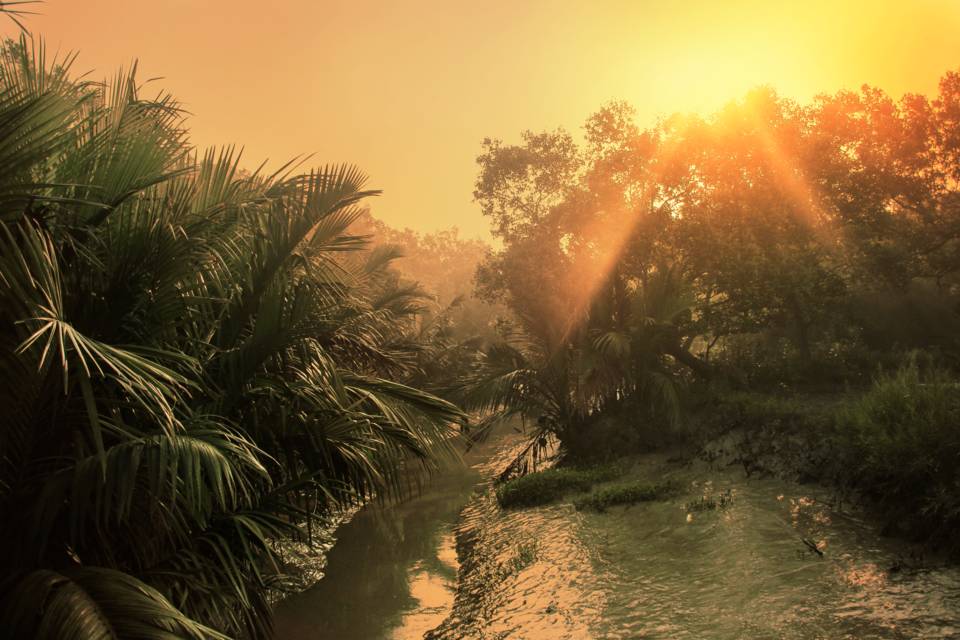
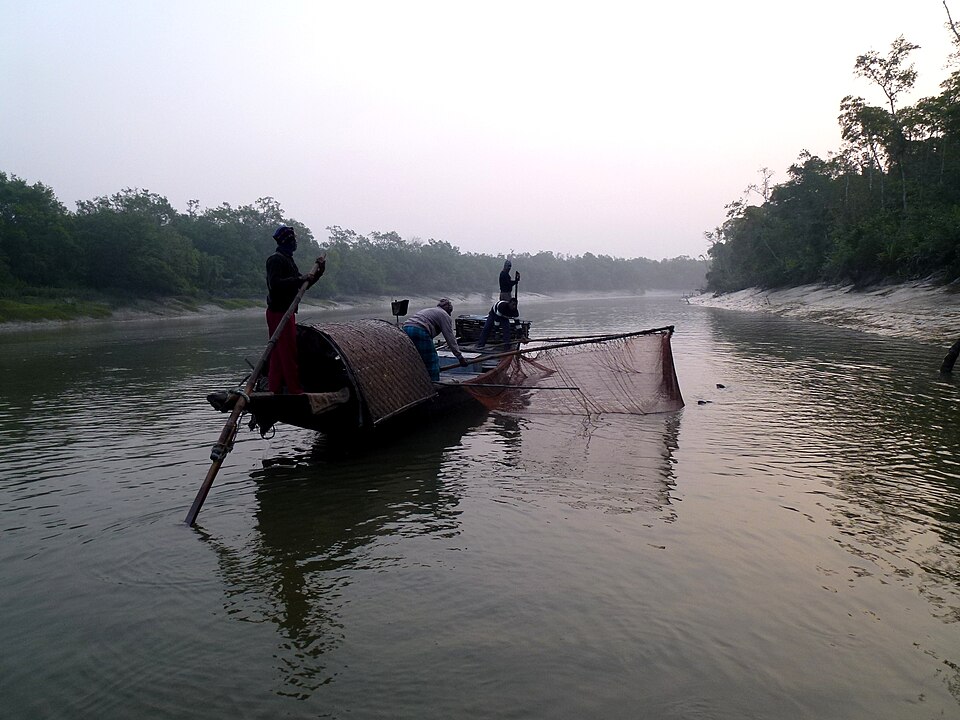
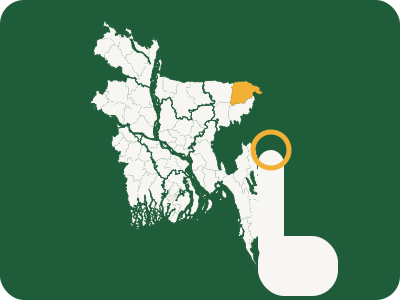
The engine boats to Karamjal and Harbaria run down the main river. Dhangmari is the other way of seeing the forest: from a dinghy, paddled, in the khals. The village sits on the west bank of the Pasur opposite Mongla, beside a forest station, and the canals behind it are part of the Dhangmari wildlife sanctuary, declared in 2012 to protect the Ganges and Irrawaddy dolphins that feed where fresh and salt water meet. Local boatmen take you into the creeks at high tide: the channel narrows until the branches meet overhead, the only sounds are the paddle and the birds, and the mud banks are written over with the tracks of crabs, monitor lizards and deer.
The dolphins are the sanctuary's reason for being, and on a calm morning on the river you have a fair chance of a fin. A community eco-lodge in West Dhangmari lets you stay the night among the villagers, which turns a half-day paddle into something closer to the forest's own pace. Winter is the season; in the monsoon the canals are rough and the village is wet.
Getting there: A short boat crossing from Mongla ghat to the west bank of the Pasur, or by road and trawler via Banishanta.
Things to do
- Paddle the khals at high tide with a village boatman.
- Watch for dolphins from the river bank at dawn.
- Stay a night at the community lodge and eat with the family.
Good to know
- Ask the forest station before entering the canals; a guard may be required.
- Dinghies have no shade; go early and cover up.