Known for
- 1
Susang Durgapur.
The north of the district is a small world of its own: the Someshwari coming out of the Garo Hills over a bed of sand and pebbles, the white clay hills of Bijoypur with their blue-green pools, Birishiri's Garo and Hajong villages, a rajbari and a mission on a hill. Most people who come to Netrokona come for this.
- 2
The haor in the rains.
The south-east of the district goes under water from June to October: Dingaputa and the haors of Mohanganj, Khaliajuri and Madan become an inland sea with villages on islands, crossed only by boat. In winter the same ground is rice fields to the horizon.
- 3
A kingdom that lasted seven hundred years.
Tradition says a Brahmin named Someshwar Pathak defeated the Garo king Baisya in 1280 and founded Susang, which his descendants ruled as rajas and then zamindars until 1950. The river and the rajbari at Durgapur carry his name.
- 4
Garo, Hajong and the Tonk rebellion.
Around Durgapur and Kalmakanda live Garo, Hajong, Koch and Banai communities; the Hajong peasants' Tonk movement against rent in kind, led by Comrade Moni Singh in the 1940s, is remembered every December at the Moni Singh fair, and the cultural academy at Birishiri keeps the languages and dances alive.
- 5
An old fort by the Betai.
At Roailbari in Kendua the roofless brick buildings of a Sultanate-era fort, dug out by the Department of Archaeology in the 1990s, are the district's one real ruin.
- 6
Balish mishti.
Netrokona's pillow sweet, a chhana sweet the size of a fist soaked in syrup and topped with thickened milk, made in the town for over a century and a geographical indication since 2025.
Best season
GoodFairNov–Feb
- Moni Singh fair A week in early December at Durgapur, remembering the Tonk movement
- Wangala The Garo harvest festival, in the villages around Durgapur and Kalmakanda in autumn
- Chaitra Sankranti fair The last day of the Bangla year, mid-April, at Durgapur
November to February for Durgapur: the Someshwari is low and clear, the sand roads across its bed are open, the white clay hills and their pools are at their brightest and the Garo Hills behind are sharp in the morning. The Moni Singh fair in early December fills Durgapur for a week.
July to September for the haor: Dingaputa and the Mohanganj haors are at their widest, and this is the only time the boat journeys are possible. It is hot and wet, and storms blow up fast on open water.
The monsoon is hard on the north: the Someshwari floods in hours after rain in Meghalaya, washing out the crossings and sometimes Durgapur's lanes, so avoid the hills from June to September unless you are there for the river in spate.
Getting there
Train
From Dhaka
About 5 hours to Netrokona
Haor Express or Mohanganj Express from Kamalapur, on to Mohanganj for the haor.
Bus
From Dhaka
5–6 hours to Durgapur
Mohakhali to Netrokona town, or straight to Durgapur via Mymensingh and Shyamganj; night coaches for a day trip.
Getting around
Durgapur to the sights
Cross the Someshwari by sand track or boat; hire a motorcycle or auto for the day for Bijoypur, Ranikhong and the rajbari.
By train, the Haor Express and the Mohanganj Express run from Dhaka's Kamalapur through Netrokona town to Mohanganj, about five hours to Netrokona; Mohanganj is the railhead for the haor.
By bus, services leave Mohakhali in Dhaka for Netrokona town and, separately, for Durgapur through Mymensingh and Shyamganj; Durgapur is about 180 km and five to six hours, and night coaches are popular for a one-day trip. From Netrokona town, buses and CNGs run to Durgapur (about 40 km), Kalmakanda, Kendua and Mohanganj.
Getting around Durgapur: Birishiri is the ward across the Someshwari from Durgapur bazar. In the dry season autos and motorcycles cross on sand tracks over the river bed, in the rains by boat; motorcycles and autos are hired by the day to do Bijoypur, Ranikhong, the rajbari and the dighis in one loop.
Local food
Balish mishtiMust try
The pillow sweet of Netrokona town, kheer on top; a geographical indication since 2025.
Haor fish and shutki
Fresh from the haor in the rains, dried through winter, in Mohanganj and Khaliajuri.
Balish mishti, the pillow sweet, is Netrokona's own: a large oblong of chhana fried and soaked in syrup, then crowned with thick kheer. It was first made in Netrokona town by Gayanath Ghosh more than a century ago, and the shop passed through other hands to the family that still runs it; it got its geographical indication in September 2025. Buy it in the town's old sweet shops, by the piece.
The haor's fish is the other thing: in Mohanganj and Khaliajuri you eat fresh-water fish straight from the water, and dried fish, shutki, through the dry months.
In Durgapur the hotels around the bazar do rice, fish and dal; Birishiri has a couple of small eating places and the YMCA and YWCA guest houses cook for guests. Garo households make rice beer and dishes with bamboo shoot, which you may be offered in the villages but will not find in a restaurant.
Places to see
 Hills and mountainsকুপি বাতি · CC BY-SA 4.0
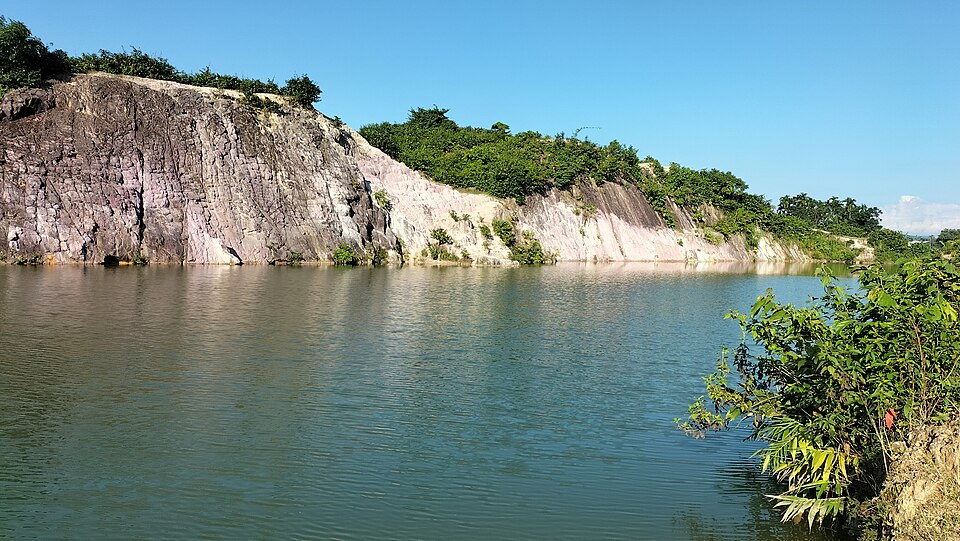
Bijoypur white clay hills
Low hills of white china clay on the border at Bijoypur, mined for the country's ceramics since the 1950s; the old cuttings hold pools of blue-green water under white and pink cliffs.
 Village and communityEsha795 · CC BY-SA 3.0
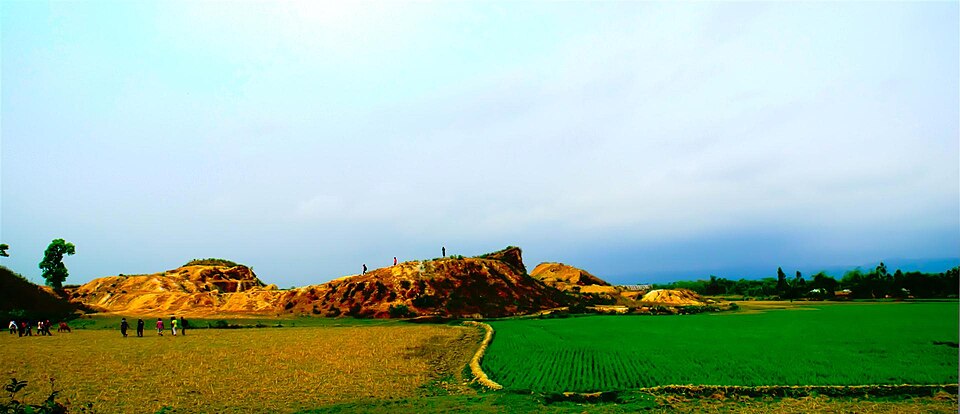
Birishiri
The village across the Someshwari from Durgapur bazar that gives the whole area its name among travellers: Garo and Hajong homes, mission schools from the British years, the cultural academy, and the base for the river, the white clay hills and Ranikhong.
 Museum and galleryBhoboghure · CC BY 4.0
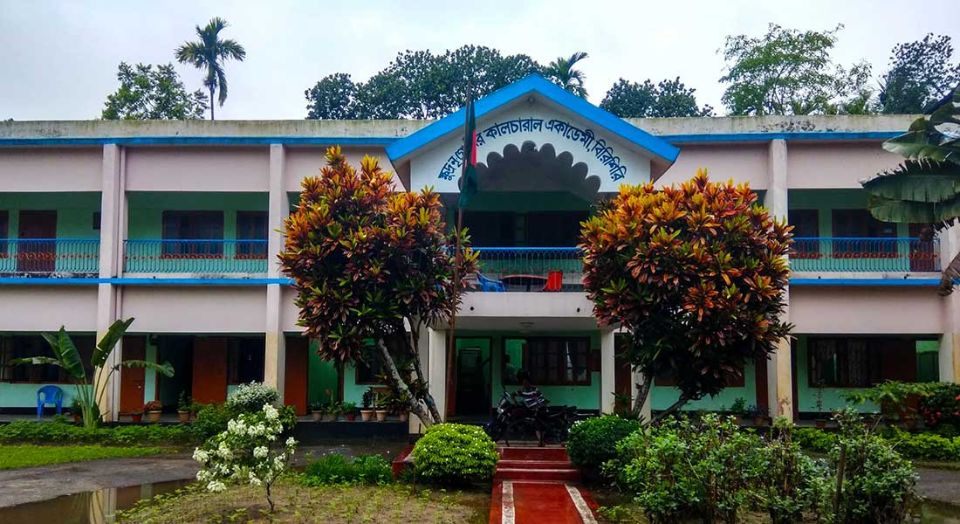
Tribal Cultural Academy, Birishiri
A government academy founded in 1977 to keep the languages, dress, songs and dances of the Garo, Hajong, Koch, Banai, Dalu and Mandi communities of greater Mymensingh; a small museum, a library and a stage for their festivals.
Ranikhong mission
St Joseph's Catholic parish on the Ranikhong hill above the Someshwari, where the river enters Bangladesh: the first Garo mission of the region, on this hill since 1915, with the river and the hills below the church.
 Archaeological siteAnup Sadi · CC BY-SA 4.0
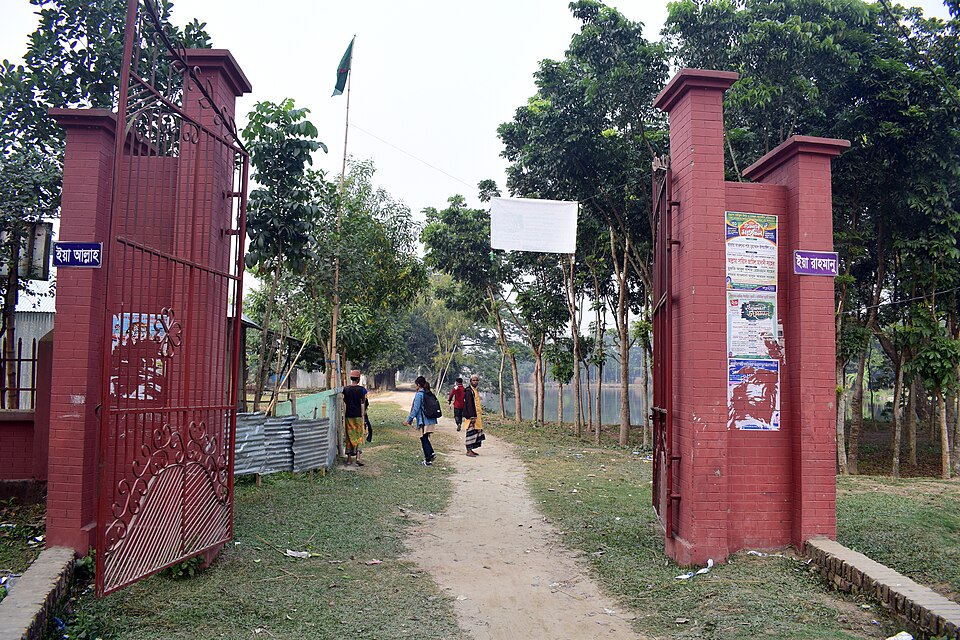
Roailbari Fort
The roofless brick buildings and mounds of a Sultanate-era fort on the Betai river in Kendua, also called Kotbari; found in the 1980s, protected in 1987 and excavated in 1991–93, Netrokona's one archaeological site.
Sat Shahid Mazar, Lengura
The graves of seven freedom fighters killed at Nazirpur on 26 July 1971 and buried at Phulbari, Lengura, at the foot of the hills in Kalmakanda; a memorial on the border road.
 River, lake and haorSaimon Chandra Shil · CC BY-SA 4.0
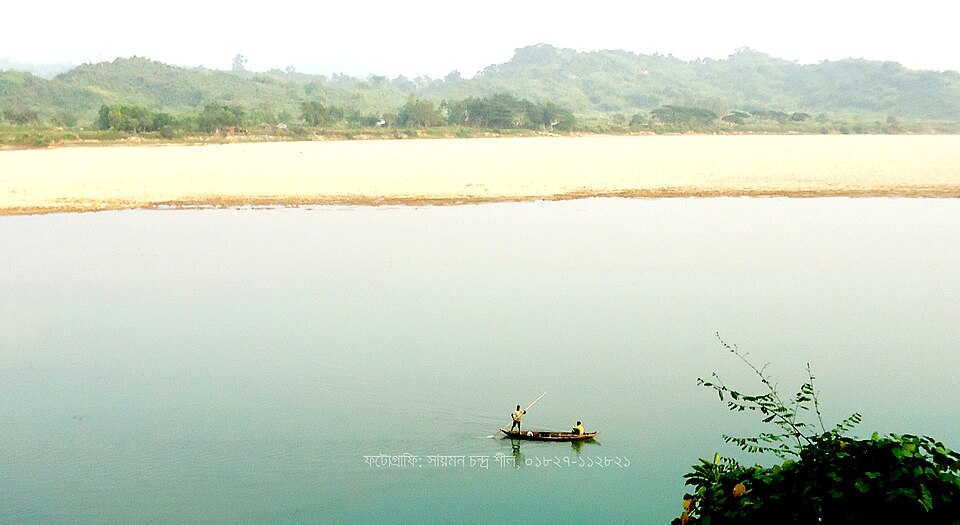
Someshwari River
The river that comes down from the Garo Hills past Ranikhong and Durgapur: clear water over pebbles and sand in winter, a torrent in the rains, boats, coal and sand gatherers, and the hills standing behind it.
 Fort and palaceSalim Khandoker · CC BY-SA 4.0
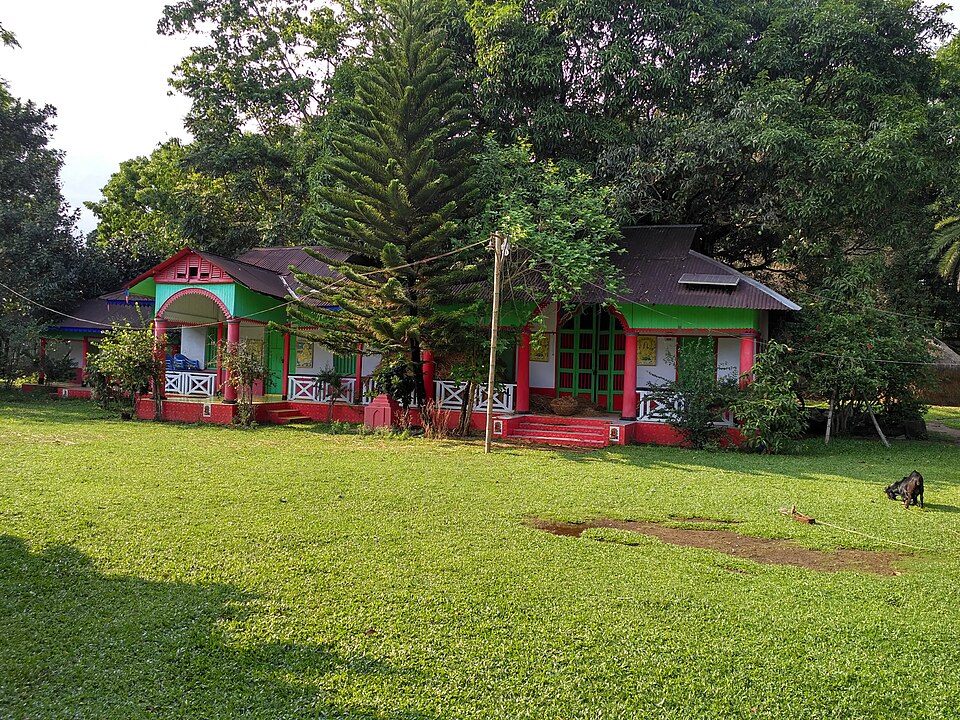
Susang Durgapur Rajbari
The seat of the Susang rajas, descendants of Someshwar Pathak who ruled this corner from 1280 until the end of the zamindari; rebuilt after the 1897 earthquake, now four decaying houses, one of them the magistrate's residence.
Times, fares and opening hours change. Check before you go.
Take this guide offline.
The same guide, every place and photo, on your phone without a connection. Mark the district when you get there.