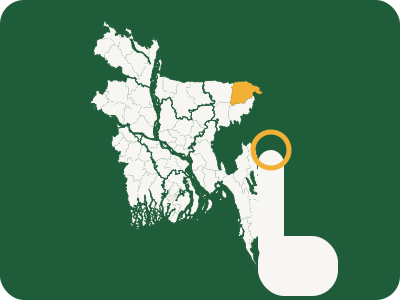
Hills and mountains, Netrokona
Bijoypur white clay hillsবিজয়পুরের সাদা মাটির পাহাড়
- Time needed
- An hour.
- best months
- Oct–Feb
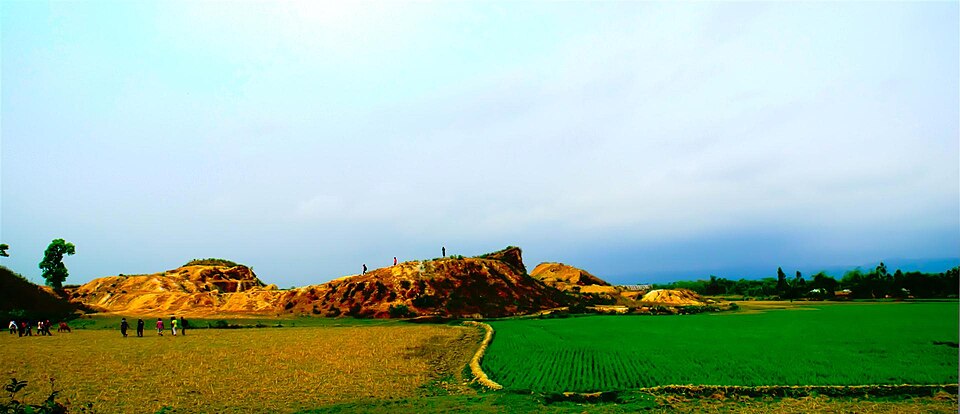
Low hills of white china clay on the border at Bijoypur, mined for the country's ceramics since the 1950s; the old cuttings hold pools of blue-green water under white and pink cliffs.
Plan your visit
- Best time
- Winter mornings and late afternoons; the pools are fullest and bluest after the rains end.
At a glance
- What
- Kaolin (china clay) hills, mined since the 1950s
- Recognition
- Geographical indication for Bijoypur white clay, 2021
- From Birishiri
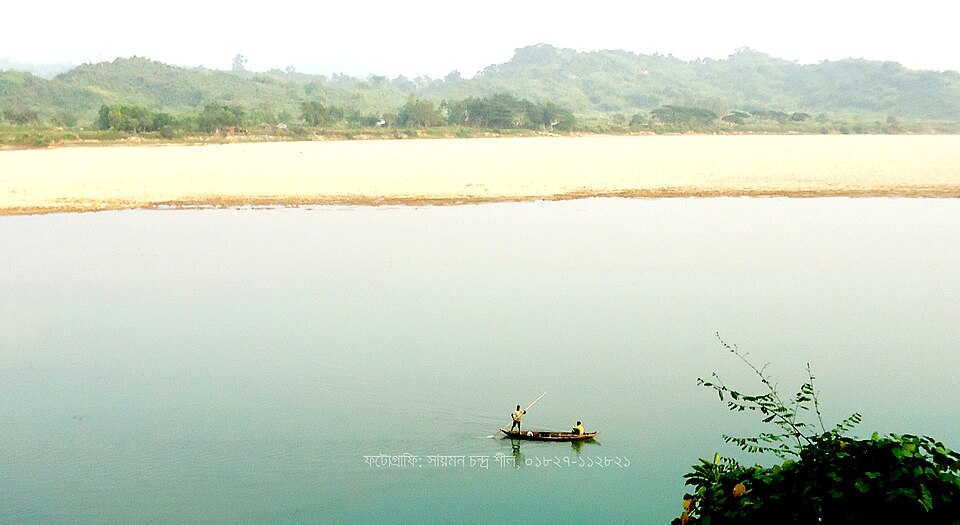
- A few kilometres north, across the Someshwari
About
In Kullagara union, a few kilometres north of Birishiri along the border, the ground turns white. The hills here are kaolin, china clay, and most of Bangladesh's ceramic industry has dug its raw material out of them since the 1950s; the Bijoypur clay was given its own geographical indication in 2021. Decades of cutting have left terraces and pits, and where the pits have filled with rain the water has turned a deep blue-green against the white and rust-pink walls. That colour is what everyone comes to photograph.
The place locals call Nilapani, blue water, is the best-known pool; from the rim you see the pits, the clay hills rolling to the Meghalaya ridge and the border pillars a short walk away. It is bare and bright, with no shade, so go early or late. Mining goes on around you, trucks and workers included, and the pits are deeper than they look: nobody should swim.
From here the road runs on to Ranikhong mission on its hill, so the two are done together.
Getting there: From Birishiri or Durgapur by hired motorcycle or auto across the Someshwari and north through Bijoypur, about 20 minutes.
Things to do
- Stand on the rim above Nilapani for the blue water against the white cliffs.
- Walk the clay terraces towards the border pillars.
Good to know
- No swimming: the pits are deep, the sides crumble and people have drowned.
- Bring water and a hat; there is no shade and no shop at the pools.
- Stay on the Bangladesh side of the pillars; the BGB patrols the line.