Known for
- 1
Raja Sitaram Ray's capital.
In 1697–98 the zamindar who defied the Mughals made Mohammadpur, on the Madhumati, his capital: a moated square fort about 400 m a side, a palace, temples and tanks. The ruins, the Dashabhuja temple of 1699 and the brick-lined Lakshmi Narayan tank are still there, and Bankim Chandra wrote a novel about him.
- 2
A Buddhist monastery under a legend.
Villagers at Tila call the mound Bhatar Bhita, the 'mound of rice', after a story of a saint who left a mosque unfinished at dawn. Excavation found a Buddhist monastery from between the Maurya and Gupta periods, with small cells laid out like Paharpur's.
- 3
Katyayani Puja.
About a month after Durga Puja, in November, Magura holds its own five-day puja to the goddess Katyayani. It began in the town in 1950 and has grown to some ninety mandaps across the district, with lit gates and arches, fairs, and visitors from far away.
- 4
Sreepur's zamindar house and its poets.
The Pal Chowdhury house in Sreepur is tied to the story Tagore told in Bou-Thakuranir Haat: its daughter Bibha married Udayaditya, son of Raja Pratapaditya of Jessore. Nearby villages keep the homes of two poets, Farrukh Ahmad at Majhail and Kazi Kader Newaj at Mujdia.
- 5
Chandidas and Rajakini.
At Shatakhali in Shalikha, local memory places the medieval poet Chandidas and the washerwoman Rajakini he loved. People show the pool where he fished with a line; across it is Dhopakhali, named after her, where shards of old pottery turn up.
- 6
Rivers, baors and a century-old horse race.
The Nabaganga runs through the town, the Gorai–Madhumati makes the eastern edge, and oxbow lakes such as Sirijdia and Ghop baor lie in the fields. At Babukhali a horse race and three-day fair have been held on 16 Magh since about 1898.
Best season
GoodFairNov–Feb
- Katyayani Puja Five days in November, about a month after Durga Puja; lit mandaps across the district
- Babukhali horse race and fair 16 Magh (late January) in Mohammadpur, held since about 1898; three days of fair and jari songs
- Nabanna The new-rice harvest festival of late autumn
November to February is the time to come. The rain is over (Jashore, the nearest weather station, records under 25 mm a month from November to February), the days are warm and clear, and January nights fall to about 11 °C, so bring a light jacket for evenings by the river.
March to May grows hot, with afternoons near 36 °C in April and May. The monsoon brings almost all of the year's 1,650 mm of rain from June to September, about 370 mm in July alone; the rivers and baors are full then, but village roads to the ruins turn to mud.
Plan around a festival if you can. Katyayani Puja fills the town with lit mandaps for five days in November, about a month after Durga Puja. In late January, on 16 Magh, Babukhali in Mohammadpur holds its horse race and fair, with jari and sari songs.
Getting there
Bus
From Dhaka
About 3 h
About 168 km by road on the Asian Highway 1; buses stop at the Central Bus Terminal, Dhaka Road and Vaina More.
Train
Via Jashore
Magura has no railway; Jashore is the nearest station, then a bus north.
Air
Via Jashore
Jashore airport is the nearest domestic airport; Magura is a bus ride north.
Getting around
Around the district
Buses, tempos, easy-bikes and vans; Mohammadpur 25 km east, Sreepur 15 km north, Arpara 13 km south.
By bus is the only way in: Magura has no railway. The town is about 168 km from Dhaka by road on the Asian Highway 1, and buses take about three hours. In town they stop at the Central Bus Terminal, the Dhaka Road stop and the Vaina More stand; Vaina More is the big roundabout where the roads to Dhaka, Jashore, Jhenaidah, Sreepur and Narail meet.
By rail or air, come to Jashore, the nearest railway station and domestic airport, and take a bus north.
Around the district, buses, tempos, easy-bikes and vans do everything. Mohammadpur and Sitaram Ray's fort are about 25 km east by direct bus; Sreepur is 15 km north; Arpara, the way into Shalikha, is 13 km south; Bhatar Bhita is 12 km south off the Jashore road.
Local food
Magura is farm country, and what it is known for grows on trees: mango, jackfruit, litchi and banana are its main fruits, so come in early summer for the mango and litchi season.
Rice has the oldest story. One account of Shalikha's name says that workers building Sher Shah's road through the area ate chira, flattened rice, made from the local shali paddy, and named the place after it. Historians find no proof, but shali, the late-autumn rice, is still part of local lore.
Day to day, expect rice with river fish or meat curry, dal and vegetables in the town's restaurants and bazars. No single signature dish is recorded for Magura in our sources, so ask locally what is in season.
Places to see
Babukhali Horse Race and Fair
A horse race held at Babukhali in Mohammadpur on 16 Magh since about 1898, with a three-day fair of jari and sari songs around it.
Bhatar Bhita Buddhist Monastery
A mound at Tila, by the Fatki river, that legend calls the 'mound of rice'; excavation found a Buddhist monastery from between the Maurya and Gupta periods.
Chandidas and Rajakini's Ghat, Shatakhali
Where local tradition places the poet Chandidas and the washerwoman Rajakini: the pool where he fished, and Dhopakhali across it, with old pottery shards.
 Fort and palaceBhoboghure · CC BY 4.0
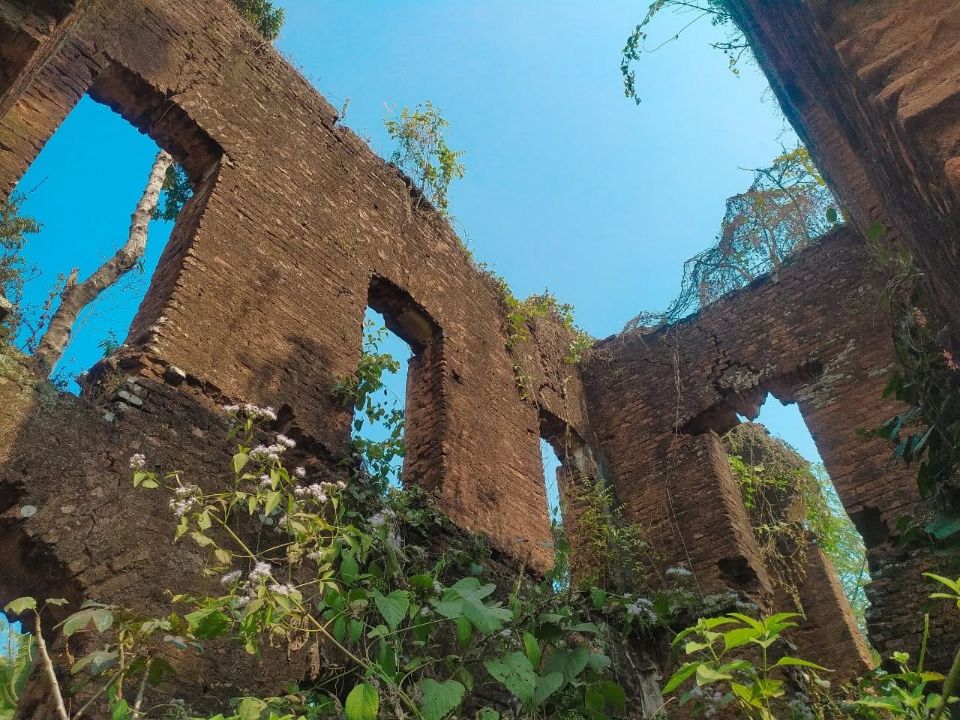
Chhandra Zamindar Bari
The ruins of the Chhandra zamindars' house in Shalikha, from where this area's rent was collected and the land governed, reached by van from Simakhali bazar.
 Monument and memorialBhoboghure · CC BY 4.0
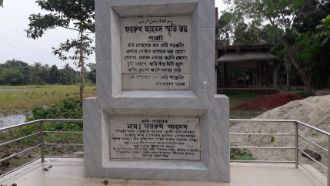
Farrukh Ahmad's Home, Majhail
The family home and graveyard of Farrukh Ahmad, the 'poet of the Muslim renaissance', in his birth village of Majhail in Sreepur.
Gopalgram Shahi Mosque
A Mughal-style mosque in Gopalgram, Shalikha, of tile-brick and clay mortar with flower carvings, now called Baitun Nur Jame Masjid and still in daily use.
Pir Mokarram Ali's Dargah and Hazrapur Indigo Factory
A Sufi shrine on the Nabaganga at Ichakhada, 7 km west of Magura, beside the indigo factory at Hazrapur where the district’s 1856–60 indigo revolt began.
 Monument and memorialBhoboghure · CC BY 4.0
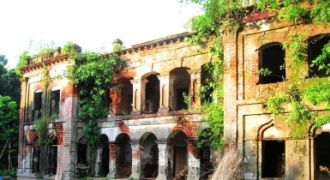
Kazi Kader Newaj's Home, Mujdia
The village home in Mujdia, Sreepur, where the poet Kazi Kader Newaj settled in 1952, and the library named after him.
 City and landmarkFarabi Al Russell · CC BY-SA 4.0
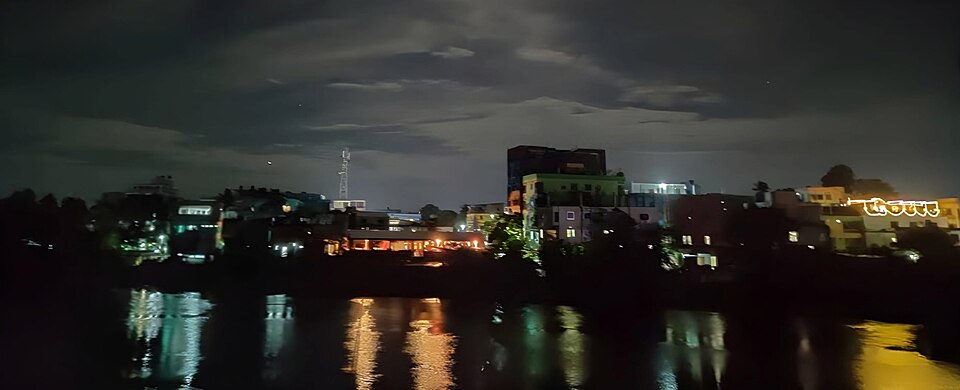
Magura Town and the Nabaganga
The district town on the Nabaganga: a river walk, riverside ashrams and maths, an eighteenth-century Shiva temple nearby, and Katyayani Puja's lit mandaps in November.
Siddheshwari Math, Atharokhada
A math on the bank of the Nabaganga at Atharokhada, about 3 km from Magura town, on a site once known as the Kalikatala cremation ground.
 Fort and palaceMd Shehab Hossan · CC BY-SA 4.0
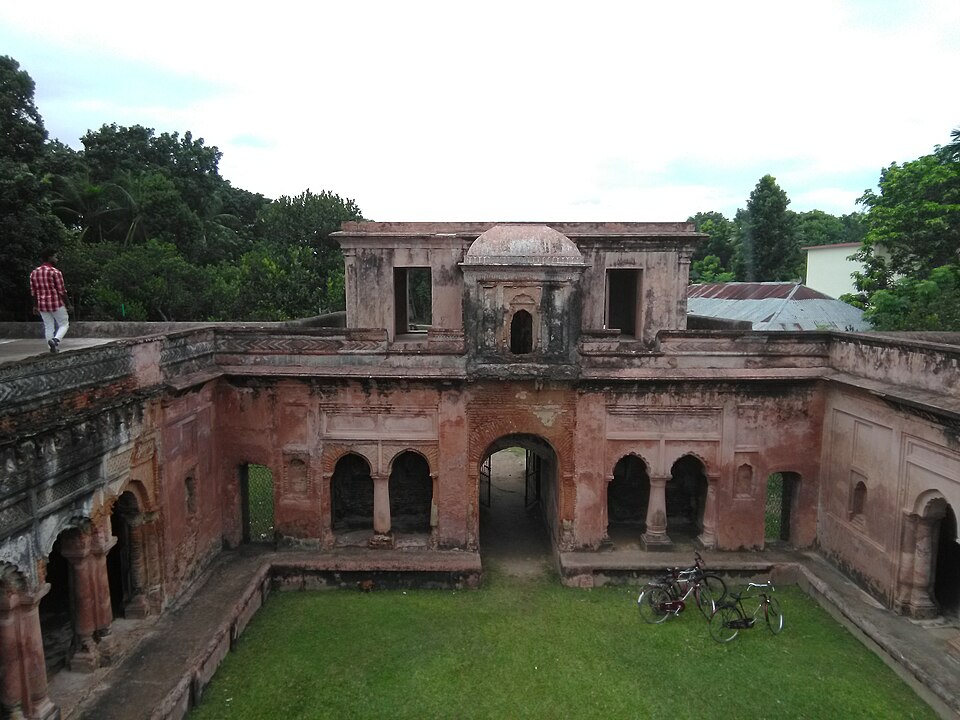
Raja Sitaram Ray's Palace-Fort
The ruined capital of the zamindar who defied the Mughals, at Mohammadpur: palace, Shiva temple, the Dashabhuja temple site and a tank lined with brick to its floor.
Sreepur Zamindar Bari
The Pal Chowdhury zamindars' house in Sreepur, tied to the story Tagore told in Bou-Thakuranir Haat; its lion gate and some inner rooms still stand.
Gopal Jiu (Radha Krishna) Temple, Talkhari
A protected temple at Talkhari, remembered as the birthplace of the sage Lokenath, damaged in 1971, restored, and still used for worship at festivals.
Sources 19
Times, fares and opening hours change. Check before you go.
Take this guide offline.
The same guide, every place and photo, on your phone without a connection. Mark the district when you get there.