Fort and palace, Magura
Raja Sitaram Ray's Palace-Fortরাজা সীতারাম রায়ের প্রাসাদ-দুর্গ
- Time needed
- About an hour and a half.
- best months
- Nov–Feb
The ruined capital of the zamindar who defied the Mughals, at Mohammadpur: palace, Shiva temple, the Dashabhuja temple site and a tank lined with brick to its floor.
At a glance
- Capital from
- 1697–98
- Fort
- Square, each side at least 400 m, moated
- Dashabhuja temple
- 1699, by its inscription; little remains
- Care
- Department of Archaeology
About
Sitaram Ray (1658–1714) rose from a family of Mughal revenue officials to become a zamindar and then, from 1687–88, a raja who cleared the rivers of Magh and Portuguese pirates. In 1697–98 he made Mohammadpur his capital: a square fort, each side at least 400 m, with a wide moat that people here still call the gor, beels on three sides and the Madhumati on the fourth. Inside stood barracks, temples and tanks. Legend says he chose the spot when his horse's leg sank into the ground and digging uncovered an image of Lakshmi Narayan. When he stopped paying revenue, the Nawab's forces defeated him, and his lands were shared out among the zamindars of Natore, Chanchra and Naldanga. Bankim Chandra Chattopadhyay told his story in the novel Sitaram.
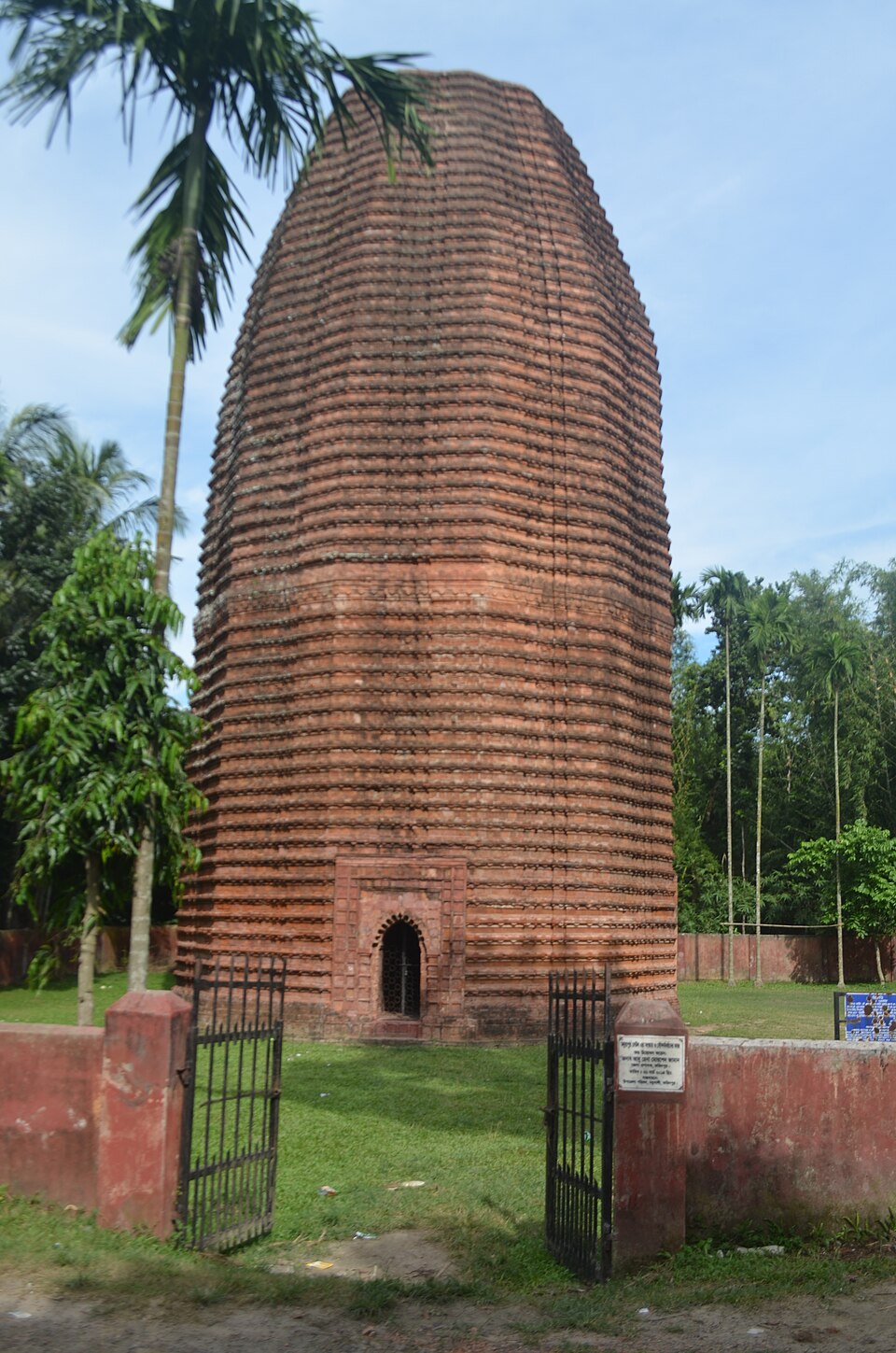
What you see today: part of the palace has almost entirely fallen, and the part still standing has sunk well into the ground. In front of it a Shiva temple survives whole. East of the palace, beside the Lakshmi Narayan tank, little is left of the Dashabhuja temple, which an inscription found there dates to 1699. The tank itself is the most remarkable piece: it runs north to south, its banks are lined with brick from top to bottom, and even its floor is paved; seven or eight wells in the bed keep it full. Its walls rise in two steps lined with niches, where lamps were lit in Sitaram's time. Much of the land around has been built on, but the Department of Archaeology now looks after the site.
Getting there: About 28 km from Magura town. Take a bus to Mohammadpur; the Rajbari is about half a kilometre north of the bus stand beside the paved road, on foot or by rickshaw or van.
Things to do
- See the palace ruins and the intact Shiva temple in front of them.
- Walk round the Lakshmi Narayan tank and look for the lamp niches in its walls.
- Trace the old moat, the *gor*, around the fort.
Good to know
- People live and farm around the ruins: keep to paths and ask before entering yards.
- Sunken and broken walls can be unsafe: do not climb them.