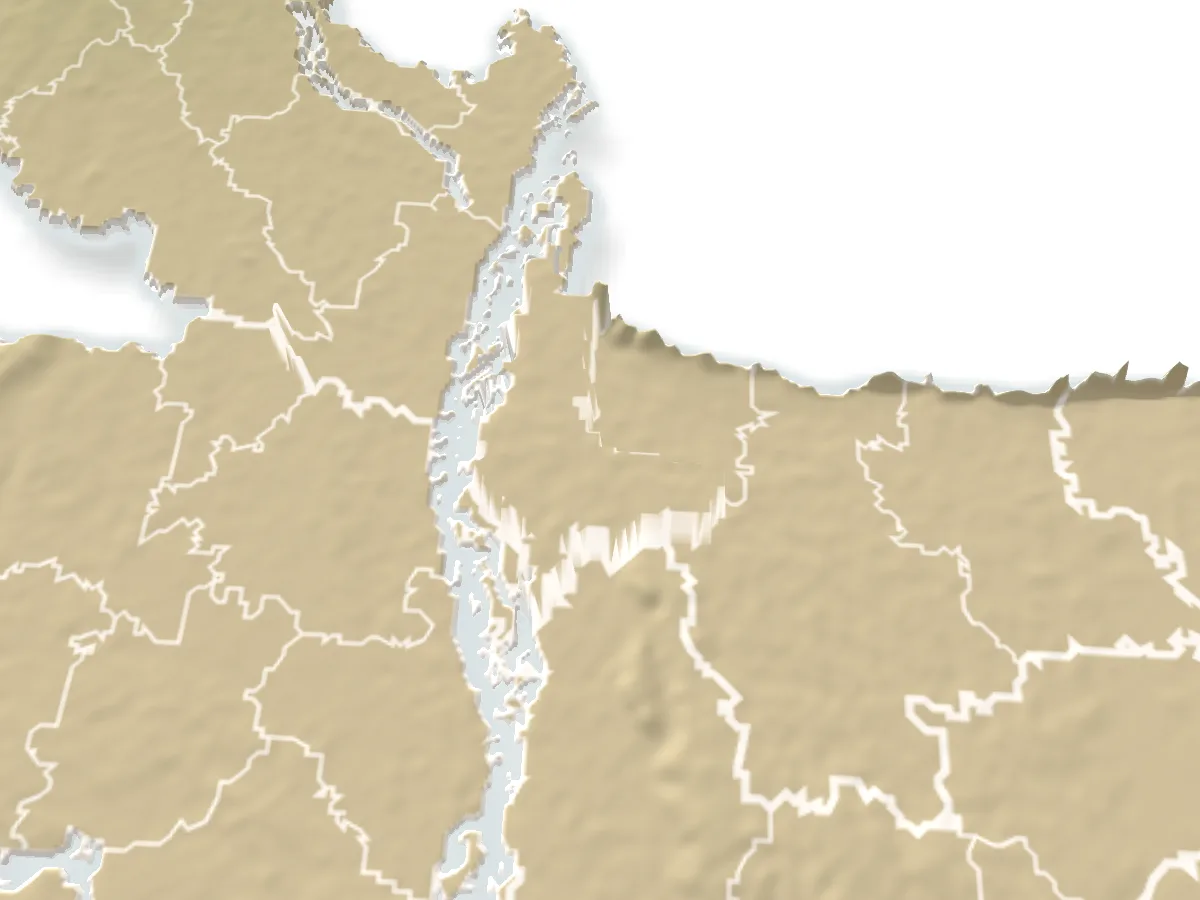
Known for
- 1
Between two rivers.
The Jamuna makes the district's western edge and the Old Brahmaputra leaves it there, bends through Jamalpur town and runs on east. Ghats, chars and boat races in the rains are the district's rhythm; Bahadurabad Ghat, where whole trains once crossed the Jamuna by ferry, is its old front door.
- 2
Named for a saint.
Tradition says Hazrat Shah Jamal came from Yemen in Akbar's time with two hundred followers and settled on the Brahmaputra bank; the town, once Singhajani, took his name. His shrine on the river is still the place people come to first.
- 3
Nakshi kantha country.
The embroidered quilt is made all over Bengal, but Jamalpur's got its own geographical indication in 2024; thousands of women stitch them around Melandaha and the town, and they are the thing to carry home.
- 4
A corner of the Garo Hills.
At Bakshiganj the district touches Meghalaya: the Lauchapra hills with their watchtowers, Garo and Koch villages on the slopes, and the Kamalpur border where one of 1971's longest battles was fought.
- 5
Old temples and a freedom-struggle ashram.
The Dayamoyee temple in the heart of town goes back to the 1690s and fills with pilgrims at Durga Puja; at Kapashatia the Gandhi Ashram of 1934 is now a small museum of the independence years.
- 6
Pithali on a banana leaf.
The district's own dish is pithali, also called milli or mendha: a thick, spiced gruel of rice flour and meat ladled over rice, served at weddings and fairs on banana leaves.
Best season
GoodFairNov–Feb
- Durmut urs and Baishakhi fair A month through Baishakh (mid-April to mid-May) at Shah Kamal's mazar, Melandaha
- Urs of Hazrat Shah Jamal Nine days each year at the shrine in Jamalpur town, with a procession through the town
- Chaitra bathing festival and fair Mid-April on the Brahmaputra, then four days of fair around the Dayamoyee temple
- Boat races on the Jamuna In the rains, on the river in Dewanganj, Islampur and Sarishabari
November to February for everything: the Lauchapra hills are clear, the river banks are dry and walkable, and the Baishakhi fairs are still months away. The Durmut urs and fair run through Baishakh, mid-April to mid-May, when it is already hot.
The monsoon is the river's season. About half the district is char and floodplain; the Jamuna and the Old Brahmaputra rise from June and parts of Islampur, Dewanganj and Madarganj flood most years. Come then only for the rivers themselves, boat races and the green, and expect roads to the chars to be cut.
Durga Puja (late September or October) is the time for the Dayamoyee temple, and the Chaitra bathing festival on the Brahmaputra in mid-April brings a four-day fair around it.
Getting there
Train
From Dhaka
About 4 hours
Tista, Brahmaputra, Jamuna or Jamalpur Express from Kamalapur; trains go on to Dewanganj.
Bus
From Dhaka
4–5 hours
Mohakhali to Jamalpur town via Mymensingh.
Getting around
Jamalpur town to the upazilas
CNG and local buses to every upazila; Bakshiganj about 50 km for Lauchapra and Kamalpur.
By train is the comfortable way: Jamalpur is on the Dhaka–Dewanganj line, about four hours from Kamalapur on the Tista, Brahmaputra, Jamuna or Jamalpur Express. Trains continue to Melandaha, Islampur and Dewanganj, so the northern upazilas are reachable without a bus. Jagannathganj Ghat in Sarishabari has its own branch.
By bus, services leave Mohakhali in Dhaka for Jamalpur town through Mymensingh, about 140 km and four to five hours depending on the traffic out of the city.
Inside the district, CNG auto-rickshaws and local buses run from Jamalpur town to every upazila. Bakshiganj, for Lauchapra and Kamalpur, is about 50 km north-east; many people reach Lauchapra from the Sherpur side through Sreebardi, because the direct Kamalpur road has long been poor. Bahadurabad Ghat is at the end of the railway in Dewanganj.
Local food
Pithali (milli / mendha)Must try
Thick spiced rice-flour and meat gruel over rice, on a banana leaf at weddings and fairs.
Pithali, milli, mendha: three names for one dish. Rice flour is cooked down with beef or mutton, onion, garlic and plenty of spice into a thick gruel, and it is ladled over rice on a banana leaf at weddings, urs and village fairs across the district. Ask for it at any celebration you pass; it is rarely on a restaurant menu.
The town's eating houses around the station and the main bazar do rice, river fish and dal; Dewanganj and Islampur have the chars' fresh-water fish. Sugar from the Zeal Bangla mill at Dewanganj and sugarcane juice in season are local too.
Nakshi kantha is not food, but it is what you take home: quilts, cushion covers and saris embroidered by women's groups around Melandaha and Jamalpur town, sold in the town's shops.
Places to see
Bahadurabad Ghat
The Jamuna ghat at the end of the railway in Dewanganj, where from 1912 whole trains were ferried across the river to Tistamukh; the rail ferry is gone since the Jamuna Bridge, the river and the ghat remain.
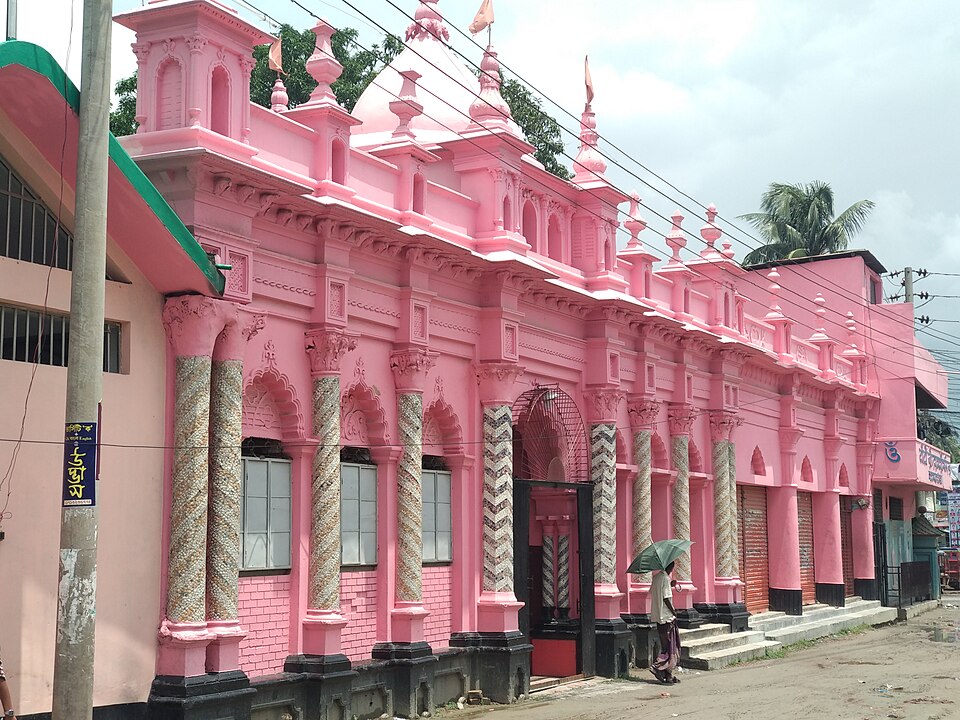 Hindu templeParvezahmed · CC BY-SA 4.0
Dayamoyee Temple
A temple of the 1690s in the centre of Jamalpur town, founded by a Mughal-era jagirdar, with Shiva, Kali, Manasa and nat temples around it; packed at Durga Puja, with a four-day fair after the Chaitra bathing festival.
Gandhi Ashram and Freedom Struggle Museum
An ashram founded in 1934 on the Jhinai river at Kapashatia, Melandaha, where villagers spun khadi and freedom fighters met; wrecked in 1948, revived as a small museum of the independence years.
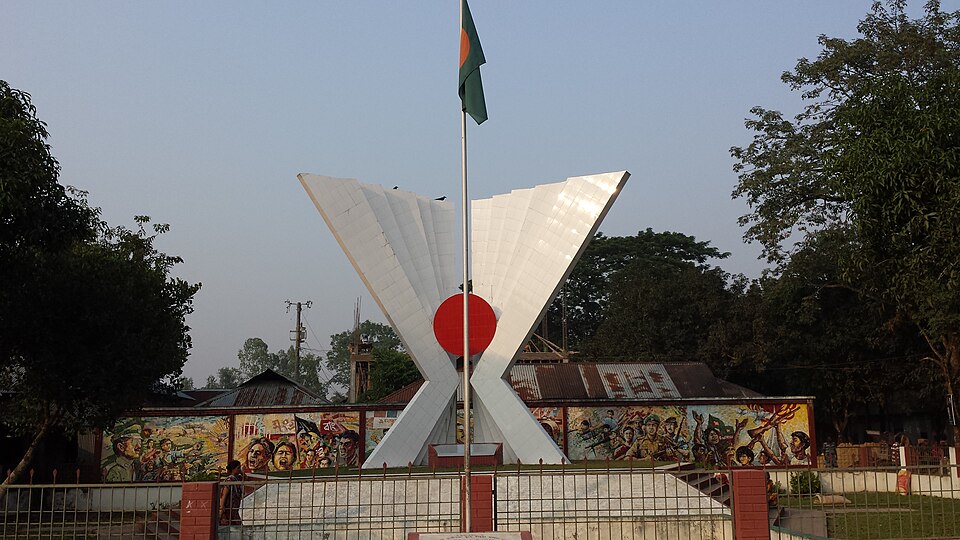 Monument and memorialFiruz Ahmmed · CC BY-SA 4.0
Kamalpur battlefield and memorial
The border post at Dhanua Kamalpur, Bakshiganj, where Sector 11 fought the Pakistan army from July to December 1971, one of the longest battles of the war; a memorial, the graves and now a land port beside it.
Lauchapra hills
Jamalpur's corner of the Garo Hills at Bakshiganj: forested ridges on the Meghalaya border with a recreation centre of 1994, watchtowers that look into India, a small lake and Garo and Koch villages on the slopes.
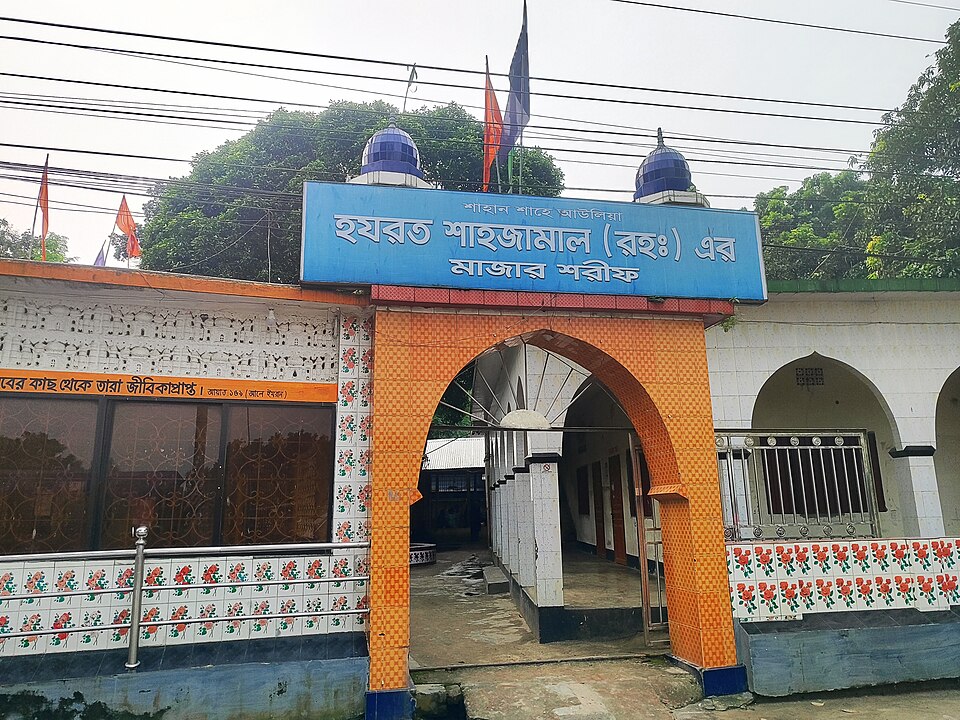 Monument and memorialNahian · CC BY-SA 4.0
Mazar of Hazrat Shah Jamal
The shrine of the saint the district is named for, on the Brahmaputra bank at the north-west edge of Jamalpur town; a mosque, the grave and a nine-day urs every year.
Mazar of Shah Kamal at Durmut
The shrine of Hazrat Shah Kamal in Durmut, Melandaha, known for its month-long urs and Baishakhi fair every April and May, one of the biggest village fairs in the district.
Sources 12
Times, fares and opening hours change. Check before you go.
Take this guide offline.
The same guide, every place and photo, on your phone without a connection. Mark the district when you get there.