Museum and gallery, Jamalpur
Gandhi Ashram and Freedom Struggle Museumগান্ধী আশ্রম ও স্বাধীনতা সংগ্রাম জাদুঘর
- Time needed
- About an hour.
An ashram founded in 1934 on the Jhinai river at Kapashatia, Melandaha, where villagers spun khadi and freedom fighters met; wrecked in 1948, revived as a small museum of the independence years.
At a glance
- Founded
- 1934, by Nasir Uddin Sarkar
- Where
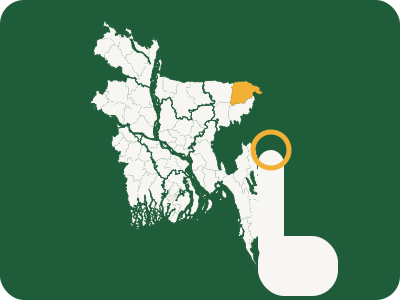
- Kapashatia, Jhaugara union, Melandaha, on the Jhinai
- Destroyed
- 1948; only the office room survived
About
In 1934 Nasir Uddin Sarkar, secretary of the Jamalpur subdivision Congress and a follower of Gandhi, set up an ashram at Kapashatia village in Jhaugara union, about 15 km from Melandaha on the bank of the Jhinai. Villagers came to spin thread on the charkha, learn crafts, read and exercise, and the ashram became a meeting place of the anti-colonial movement in this part of Bengal: A. K. Fazlul Huq, Maulana Bhasani, Comrade Moni Singh, Satyen Sen, Ranesh Dasgupta and many others came through and held political meetings here.
In 1948, after Partition, Muslim League supporters attacked it repeatedly and razed most of the buildings; only the office room survived, and Nasir Uddin was badly beaten. The site lay neglected for decades. It has since been revived as the Gandhi Ashram and Freedom Struggle Museum, with the old office, photographs and documents of the movement and a memorial to its founder.
It is a place for the history rather than the architecture: a riverside village, a few rooms and the story of what was attempted here.
Getting there: Train or bus to Melandaha, then a CNG or motorcycle about 15 km to Kapashatia.
Things to do
- See the surviving office room and the museum's photographs and documents.
Good to know
- Opening depends on the caretaker; ask in Melandaha or phone ahead through the upazila office.